Balance & Fall Prevention: The Quiet Superpower After 40
When women think about getting fit after 40, they think about fat loss, strength, and energy. Almost nobody thinks about balance. And yet, balance is quietly one of the most important things you can train in this decade and beyond — because it's the difference between staying strong, mobile, and independent for the rest of your life, and a single fall that changes everything.
I know that sounds dramatic. But stay with me, because this is one of those topics that feels irrelevant right up until the moment it becomes the most relevant thing in the world. And the beautiful part? Balance is completely trainable. You can build it at any age, and the earlier you start, the more you'll protect.
Free Protein Cheat Sheet
Your daily protein target, the protein in 40+ everyday foods, and 25 easy high-protein snacks — all on one printable page.
🔒 No spam, ever. Unsubscribe anytime.
Why Balance Declines After 40
Balance isn't a single skill — it's a whole system working together. Your muscles, your inner ear, your vision, your nervous system, and your joints all communicate constantly to keep you upright. After 40, several of these quietly start to decline. You lose muscle mass and power. Your reflexes slow slightly. The tiny stabilising muscles in your feet and ankles weaken if they're not challenged. And crucially, most modern life gives your balance system almost nothing to do — flat floors, chairs, and predictable surfaces.
Use it or lose it applies to balance more than almost anything else. The good news is the reverse is equally true: challenge your balance regularly, and it comes back remarkably quickly.
Why This Matters So Much
Falls are the leading cause of injury for women as they age, and the fear of falling often leads women to move less — which weakens them further and makes falls more likely. It's a downward spiral. But it's a spiral you can reverse starting today.
Training your balance now, in your forties and fifties, is like paying into a retirement fund for your future independence. Every session builds a buffer. You're not training for today — you're training for the woman you'll be at 70, 80, and beyond, who can garden, travel, play with grandchildren, and move through the world with confidence.
The Good News: Strength Training Already Helps
Here's something reassuring. If you're already strength training — squats, lunges, deadlifts, step-ups — you're already building a huge part of your balance foundation. Strong legs and a strong core are the bedrock of stability. So if you take nothing else from this article, know that lifting weights is one of the best balance investments you can make.
But we can be more targeted. Let me give you specific balance work you can add in just a few minutes a day.
5 Simple Balance Exercises to Start Today
1. Single-Leg Stand
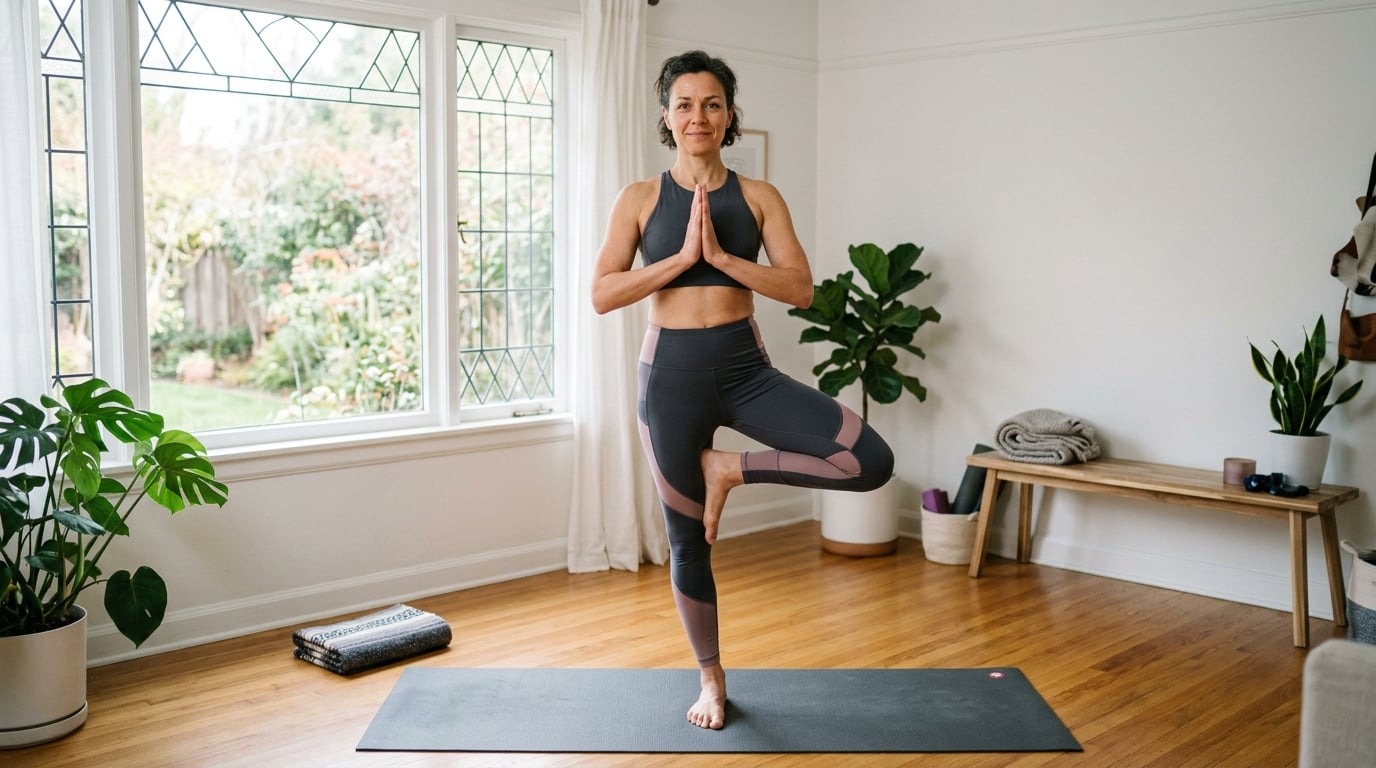
Stand near a bench or wall for safety. Lift one foot off the floor and balance on the other leg. Aim for 20-30 seconds each side. Too easy? Close your eyes — it becomes dramatically harder and trains your system in a whole new way.
2. Heel-to-Toe Walk
Walk in a straight line placing the heel of one foot directly in front of the toes of the other, like walking a tightrope. Ten to fifteen steps, slow and controlled. This trains the dynamic balance you use when walking on uneven ground.
3. Standing Weight Shifts
Stand with feet hip-width apart and slowly shift your weight forward onto your toes, then back onto your heels, then side to side. Simple, safe, and a great starting point if your balance feels shaky.
4. Step-Ups with a Pause
Step up onto a low step and pause at the top, balancing on one leg for a second before stepping down with control. This blends strength and balance in the most functional way possible — it mimics real life.
5. The Sit-to-Stand
Stand up from a chair without using your hands, then sit back down with control. Repeat ten times. This builds the exact strength and stability you need to move confidently in daily life, and it's a brilliant measure of your lower-body power over time.
Building It Into Your Week
You don't need a separate balance workout. Sprinkle these into your day. Do single-leg stands while you brush your teeth. Practise heel-to-toe walking in the hallway. Do a few sit-to-stands while the kettle boils. Two to three minutes a day, done consistently, will build noticeable improvement within a few weeks.
If you want to be more structured, add five minutes of balance work at the end of your strength sessions, two or three times a week. That's more than enough to make real progress.
Safety First
Always practise near something sturdy you can grab — a bench, a wall, a kitchen counter. The goal is to challenge your balance, not to fall. As you get stronger and more confident, you'll need the support less and less. Progress at your own pace, and never push into anything that feels genuinely unsafe.
The Bottom Line
Balance is the quiet superpower of ageing well. It doesn't get the attention that fat loss or toned arms do, but it may be the single most important thing you can protect for your long-term independence and quality of life. And it costs you nothing but a few minutes a day.
Strong legs, a strong core, and a balance system you challenge regularly — that's the recipe for a body that carries you confidently through every decade ahead. Start today, start small, and stay near a wall. Your future self will thank you more than you can imagine.
Free Protein Cheat Sheet
Your daily protein target, the protein in 40+ everyday foods, and 25 easy high-protein snacks — all on one printable page.
🔒 No spam, ever. Unsubscribe anytime.
Want personalised help with this?
My 1:1 online coaching gives you a fully custom training and nutrition plan built around your goals, your body, and your life. 12 weeks, $69/week, with me in your corner the whole way.
Learn About CoachingFree 7-Day Fat Loss Meal Plan
A printable week of protein-forward meals, shopping list, meal prep guide and tracker — designed for women over 40.