Lower Body Strength for Women Over 40: Build the Foundation You Stand On
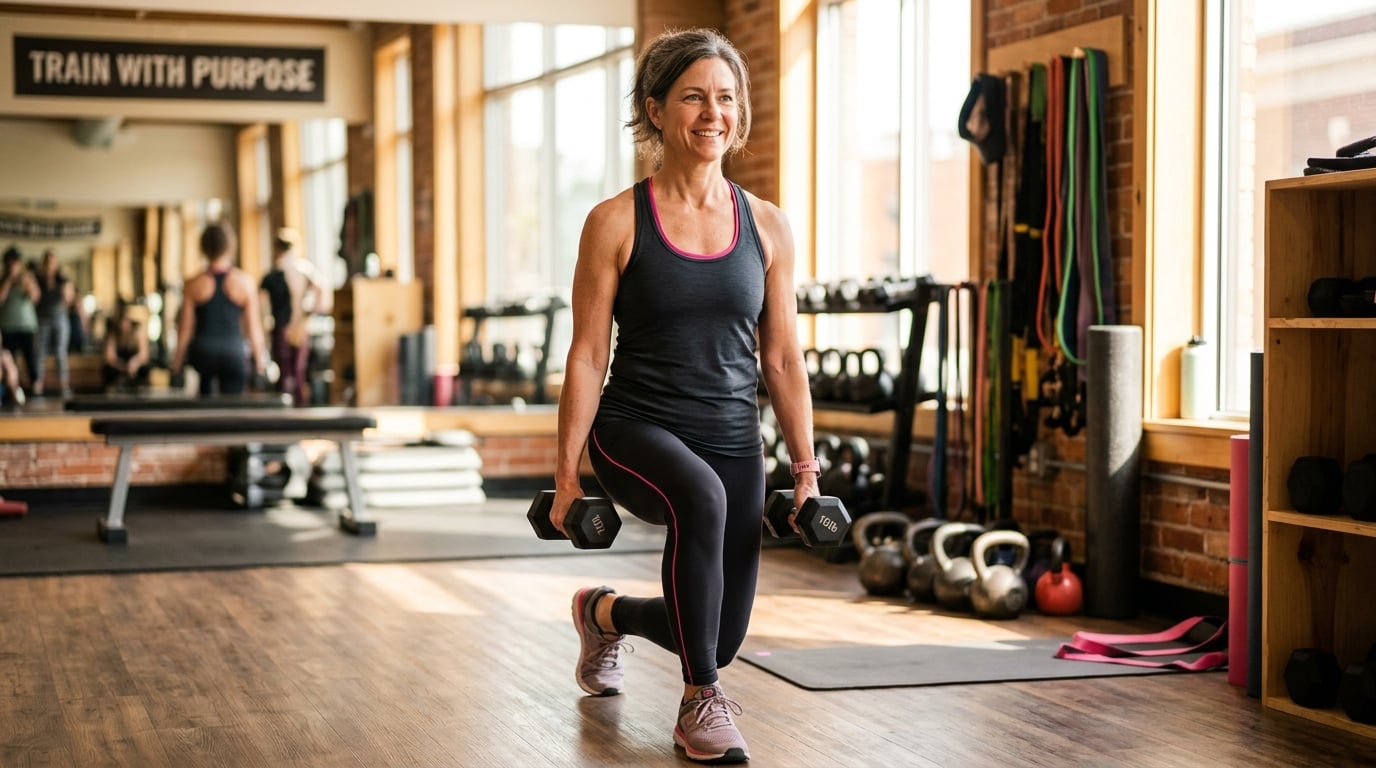
Ask most women over 40 what they want from their body, and somewhere on the list you will find this: strong, capable legs that carry them up stairs without thinking, let them keep up with grandchildren, and hold them steady on an icy footpath. We do not always call it strength — we call it independence. But make no mistake, the two are the same thing, and they are built in exactly the same place: your lower body.
Here is what nobody tells you in your forties. The muscles of your legs and glutes are the largest in your entire body, and they are also the ones that decline fastest when we stop challenging them. From around 40 onwards, we lose muscle mass year on year unless we actively train to keep it. The good news? Lower body muscle responds beautifully to resistance training at any age. I have watched women in their sixties add strength they did not have in their thirties. It is never too late, and today I am going to show you exactly how to start.
Free 7-Day Beginner Strength Plan
Three simple full-body dumbbell workouts with form cues, warm-ups and rest days built in — designed for women over 40.
🔒 No spam, ever. Unsubscribe anytime.
Why Lower Body Strength Matters More After 40
Your legs and glutes do far more than help you look good in a pair of jeans, although they certainly do that too. Strong lower body muscles are the foundation of nearly every daily movement — standing, walking, climbing, lifting, catching yourself when you stumble. When these muscles are strong, life feels easier. When they weaken, everything from a supermarket trip to a night out becomes a little harder than it should be.
There are three reasons lower body training deserves top priority in your programme after 40:
- Metabolism and fat loss. Because these are your biggest muscles, training them burns significant energy and builds the metabolically active tissue that keeps your metabolism ticking over. If fat loss is a goal, ignoring your legs is a mistake.
- Bone density. Weight-bearing lower body work sends a signal to your hips, thighs and spine to hold onto bone. This matters enormously as oestrogen declines and the risk of osteoporosis rises.
- Balance and fall prevention. Strong legs and glutes keep you stable and reactive. The single biggest predictor of independence in later life is lower body strength — this is the work that keeps you steady for decades.
The Muscles You Are Actually Training
You do not need an anatomy degree, but understanding the key players helps you train them properly. Your lower body work should cover four main areas:
Glutes
Your glutes are the powerhouse of your body and, for many women who sit a lot, the most underused. Strong glutes protect your lower back, drive powerful movement, and keep your hips healthy. If you have ever had nagging back or knee pain, weak glutes are often part of the story.
Quadriceps
The muscles at the front of your thighs power you up out of chairs, up stairs, and up hills. They are heavily involved in squatting and stepping movements and are essential for knee stability.
Hamstrings
Running along the back of your thighs, your hamstrings balance out your quads and are crucial for hip health and protecting your knees. Most women are surprisingly weak here, so we give them deliberate attention.
Calves
Often forgotten, your calves are vital for ankle stability, balance and that spring in your step. They also play a quiet but important role in circulation.
Five Foundational Lower Body Exercises
You can build a remarkably strong lower body with a handful of well-chosen movements. You do not need machines or a fancy gym. Here are the five I return to again and again with the women I coach. Start with bodyweight, master the form, and add resistance over time.
1. The Sit-to-Stand (Squat)
This is the king of lower body movements and mimics one of the most important things you do all day — getting up. Start by sitting on a sturdy chair, feet flat and about hip-width apart. Lean slightly forward, press through your heels, and stand up fully, squeezing your glutes at the top. Lower back down with control. Once this feels easy, progress to squatting without the chair, then holding a weight. Aim for 3 sets of 8 to 12.
2. The Glute Bridge
Perfect for waking up sleepy glutes and kind on the knees. Lie on your back with knees bent and feet flat. Press through your heels and lift your hips until your body forms a straight line from shoulders to knees. Squeeze hard at the top, pause for a breath, then lower slowly. Progress by holding a weight across your hips or lifting one leg. Aim for 3 sets of 10 to 15.
3. The Step-Up
Wonderful for building real-world strength and improving balance one leg at a time. Using a sturdy step or bench, place one full foot on top, press through that heel, and step up to stand tall. Lower with control. This exercise is honest — it quickly reveals which side is stronger and helps you even things out. Aim for 3 sets of 8 per leg.
4. The Romanian Deadlift (Hip Hinge)
This teaches the hip hinge — the single most protective movement pattern for your back — and builds strong hamstrings and glutes. Holding a weight in front of your thighs, soften your knees and push your hips back, letting the weight travel down your legs while keeping your back flat. Feel the stretch in your hamstrings, then drive your hips forward to stand tall. Aim for 3 sets of 8 to 10.
5. The Calf Raise
Simple, effective, and easy to do anywhere. Stand tall, rise up onto the balls of your feet, pause at the top, and lower slowly. Hold onto a wall or counter for balance if needed. Progress by doing them one leg at a time or holding a weight. Aim for 3 sets of 15 to 20.
How to Put It Together
You do not need to do everything at once. Two dedicated lower body sessions a week is plenty to build meaningful strength. Here is a simple structure:
- Warm up for five minutes with some marching, gentle bodyweight squats and hip circles to get blood flowing.
- Work through three or four of the exercises above, resting for around 60 to 90 seconds between sets.
- Progress gradually. When an exercise starts to feel comfortable, add a repetition, a set, or a little weight. This slow, steady overload is what drives results.
- Finish with a stretch for your quads, hamstrings and calves to support recovery and mobility.
Common Mistakes to Avoid
Over the years I have seen a few recurring stumbling blocks. Sidestep these and you will progress far faster:
- Rushing the reps. Control beats speed every time. Slow, deliberate movement builds more strength and protects your joints.
- Avoiding weight. Bodyweight is a fine starting point, but muscle needs progressive challenge to grow. Do not be afraid to pick up a dumbbell — you will not become bulky, you will become capable.
- Neglecting the hamstrings and glutes. Most women overtrain the front of the legs and undertrain the back. Balance matters for healthy knees and hips.
- Skipping sessions when life gets busy. Consistency over months is what changes your body. A shorter session beats a skipped one.
What to Expect
Give this eight to twelve weeks of consistent effort and the changes will surprise you. Stairs will feel easier. You will get out of low chairs without pushing off the arms. Your posture will improve, your balance will sharpen, and you may notice your jeans fitting differently as you build shapely, strong muscle. Beyond the physical, there is something quietly powerful about knowing your body is capable — that you can carry, climb and catch yourself with confidence.
Strong legs are not vanity. They are the literal foundation you stand on for the rest of your life. Start where you are, be patient with the process, and trust that every squat, bridge and step is an investment in decades of independence and strength. This is your strong era, and it starts from the ground up.
Free 7-Day Beginner Strength Plan
Three simple full-body dumbbell workouts with form cues, warm-ups and rest days built in — designed for women over 40.
🔒 No spam, ever. Unsubscribe anytime.
Want personalised help with this?
My 1:1 online coaching gives you a fully custom training and nutrition plan built around your goals, your body, and your life. 12 weeks, $69/week, with me in your corner the whole way.
Learn About CoachingFree 7-Day Fat Loss Meal Plan
A printable week of protein-forward meals, shopping list, meal prep guide and tracker — designed for women over 40.