The Mobility Guide Every Woman Over 40 Needs
Here's something nobody tells you when you start working out after 40: the thing that will hold you back isn't strength. It's not cardio. It's not even motivation. It's mobility. The ability to move your joints through their full range of motion — pain-free, confidently, and with control.
I see it constantly. Women come to me ready to lift, ready to get strong, ready to change their lives. But they can't squat to depth because their hips are locked up. They can't press overhead because their shoulders won't cooperate. They can't hinge properly because years of sitting have tightened everything from their hamstrings to their thoracic spine.
Sound familiar? You're not broken. You just need to give your body permission to move the way it was designed to.
Free 7-Day Beginner Strength Plan
Three simple full-body dumbbell workouts with form cues, warm-ups and rest days built in — designed for women over 40.
🔒 No spam, ever. Unsubscribe anytime.
Mobility vs Flexibility — They're Not the Same Thing
Let's clear this up because it matters. Flexibility is passive — it's how far a muscle can stretch when an external force is applied, like pulling your leg towards you during a hamstring stretch. Mobility is active — it's your ability to move a joint through its full range of motion under your own control and with stability.
You can be flexible and still lack mobility. Think of someone who can touch their toes but can't squat without their knees caving in. Flexibility without control is just looseness. Mobility is usable range of motion. That's what we're building here.
After 40, your connective tissue changes. Tendons and ligaments become less elastic. Synovial fluid — the lubricant inside your joints — decreases. Cartilage thins. This isn't a death sentence. It just means you need to be intentional about maintaining and improving your range of motion. If you don't use it, you genuinely lose it.
Why Mobility Matters More Than Ever in Midlife
When your mobility is limited, your body compensates. Your lower back picks up the slack for tight hips. Your neck and shoulders take over for a stiff thoracic spine. These compensations create pain, reduce performance, and increase injury risk — which is the last thing you need when you're building a training habit.
Good mobility lets you:
- Lift heavier and more safely — because you can get into the right positions
- Reduce chronic aches and pains — especially in the lower back, hips, and shoulders
- Recover faster between sessions — because your tissues aren't constantly fighting against restriction
- Move better in everyday life — from picking things up off the floor to reaching overhead
- Maintain independence as you age — because mobility is what keeps you moving freely at 60, 70, and beyond
The 5 Key Areas to Focus On After 40
You don't need to spend an hour stretching. You need to target the areas that matter most for how your body moves (and where it tends to get tight). Here are the big five:
1. Hips
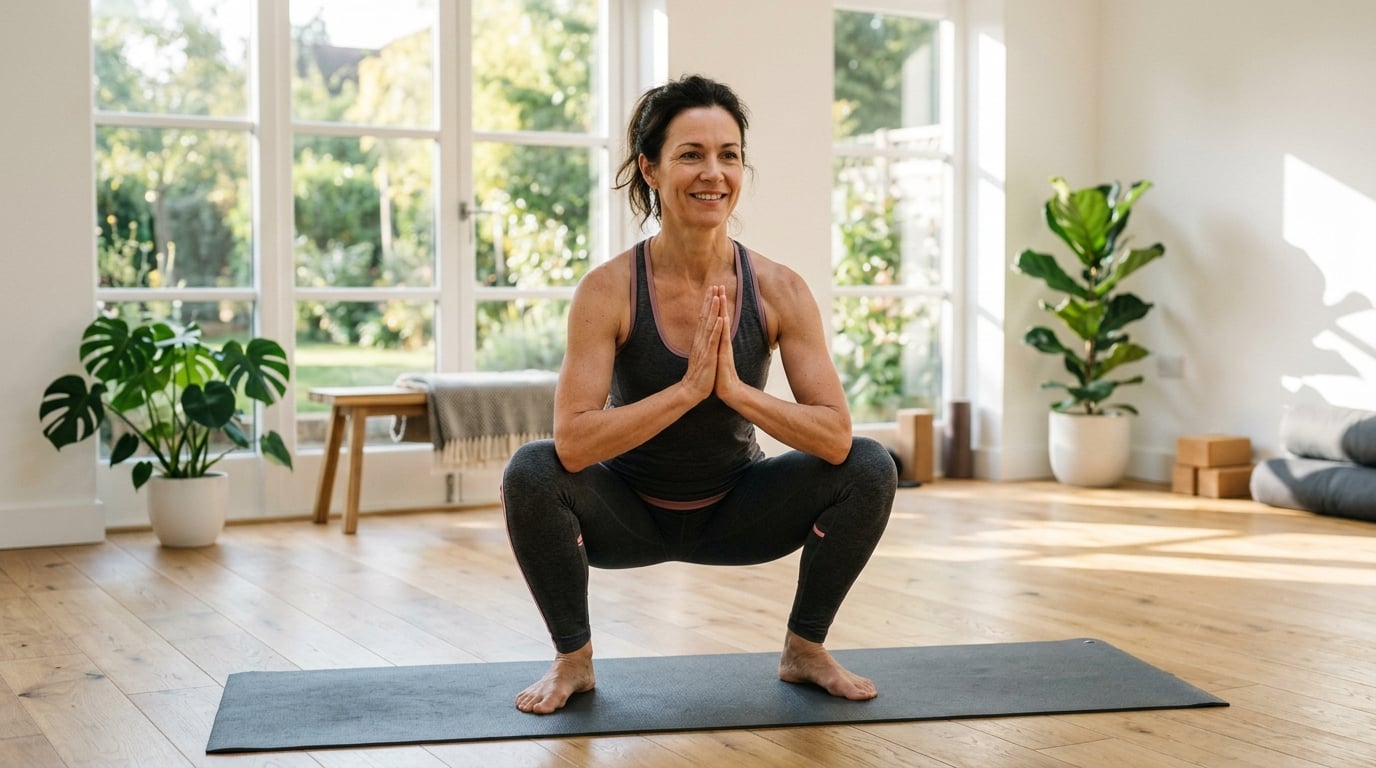
Your hips are the engine of your lower body. Tight hip flexors from years of sitting pull your pelvis into an anterior tilt, contributing to lower back pain and making squats and deadlifts harder. Focus on hip flexor stretches, 90/90 rotations, deep squat holds, and hip circles. Even two minutes of hip work before every session makes a noticeable difference.
2. Thoracic Spine
The mid-upper back is designed to rotate and extend. When it gets stiff — from desk work, driving, or phone use — your lower back and shoulders compensate. Use foam roller extensions, thread-the-needle stretches, and open book rotations to unlock this area. Your overhead pressing and posture will thank you.
3. Ankles
Limited ankle mobility is the hidden reason many women can't squat properly. If your ankles can't flex enough, your knees can't travel forward, so your torso pitches forward and your heels come up. Wall ankle mobilisations, banded ankle distractions, and calf stretches are simple fixes that pay massive dividends.
4. Shoulders
The shoulder is the most mobile joint in your body — but that mobility can shrink fast if it's not maintained. Shoulder dislocates with a resistance band, wall slides, and controlled arm circles help maintain range of motion and prevent the rotator cuff issues that become more common in midlife.
5. Wrists and Hands
Often overlooked, but if your wrists are stiff, front rack positions, push-ups, and even gripping dumbbells can become uncomfortable. Simple wrist circles, prayer stretches, and finger extensions keep these small joints healthy and pain-free.
How to Build a Simple Daily Mobility Routine
You don't need a 30-minute yoga class (unless you love it). Here's what actually works:
Morning Flow (5 minutes): Cat-cow stretches, hip circles, thoracic rotations, and a deep squat hold. Do this before your coffee. It takes less time than scrolling your phone and sets your body up for a better day.
Pre-Workout Warm-Up (5-8 minutes): Target the areas you're about to use. Leg day? Hip 90/90s, ankle mobs, and bodyweight squats. Upper body day? Shoulder dislocates, wall slides, and thoracic extensions. This isn't about breaking a sweat — it's about priming your joints.
Evening Wind-Down (5 minutes): Gentle stretching while watching TV. Hip flexor stretches, hamstring stretches, and thoracic foam rolling. This signals your nervous system that it's time to relax and helps with sleep quality too.
Common Mistakes to Avoid
Don't bounce. Ballistic stretching — bouncing in and out of positions — puts unnecessary stress on tendons and ligaments and can actually make tightness worse. Move slowly and with control.
Don't push through sharp pain. Mild discomfort or a stretching sensation is fine. Sharp, stabbing, or nerve-type pain means stop. You're not being tough by pushing through pain — you're setting yourself back.
Don't skip mobility because you're short on time. Five minutes is enough. Three minutes is enough. Even 60 seconds of targeted hip opening before you squat will improve your session. Something always beats nothing.
Don't treat it as optional. Mobility isn't a bonus — it's part of your training. The strongest women I know all prioritise their movement quality alongside their strength work. That's not a coincidence.
Mobility and Strength Work Together
Here's the thing people miss: strength training itself is one of the best mobility tools, if you do it right. A full-depth goblet squat is a hip mobility exercise. A Romanian deadlift through a full range is a hamstring flexibility exercise. An overhead press done correctly mobilises your thoracic spine and shoulders.
The key is performing exercises through the fullest range of motion you can control. Partial reps have their place, but consistently cutting your range of motion short is a missed opportunity to build both strength and mobility at the same time.
Start Where You Are
If you haven't touched your toes in years, that's okay. If your squat looks more like a quarter-squat, that's a starting point, not a failure. Mobility improves gradually and consistently — often faster than you expect once you commit to a few minutes a day.
Your body wants to move well. It's been waiting for you to give it the chance. Start with five minutes tomorrow morning and build from there. In a month, you'll move differently. In three months, you'll train differently. And in six months, you'll wonder how you ever got by without it.
This is your strong era. And strong means moving well, not just moving heavy.
Free 7-Day Beginner Strength Plan
Three simple full-body dumbbell workouts with form cues, warm-ups and rest days built in — designed for women over 40.
🔒 No spam, ever. Unsubscribe anytime.
Want personalised help with this?
My 1:1 online coaching gives you a fully custom training and nutrition plan built around your goals, your body, and your life. 12 weeks, $69/week, with me in your corner the whole way.
Learn About CoachingFree 7-Day Fat Loss Meal Plan
A printable week of protein-forward meals, shopping list, meal prep guide and tracker — designed for women over 40.