The Complete Protein Guide for Women Over 40
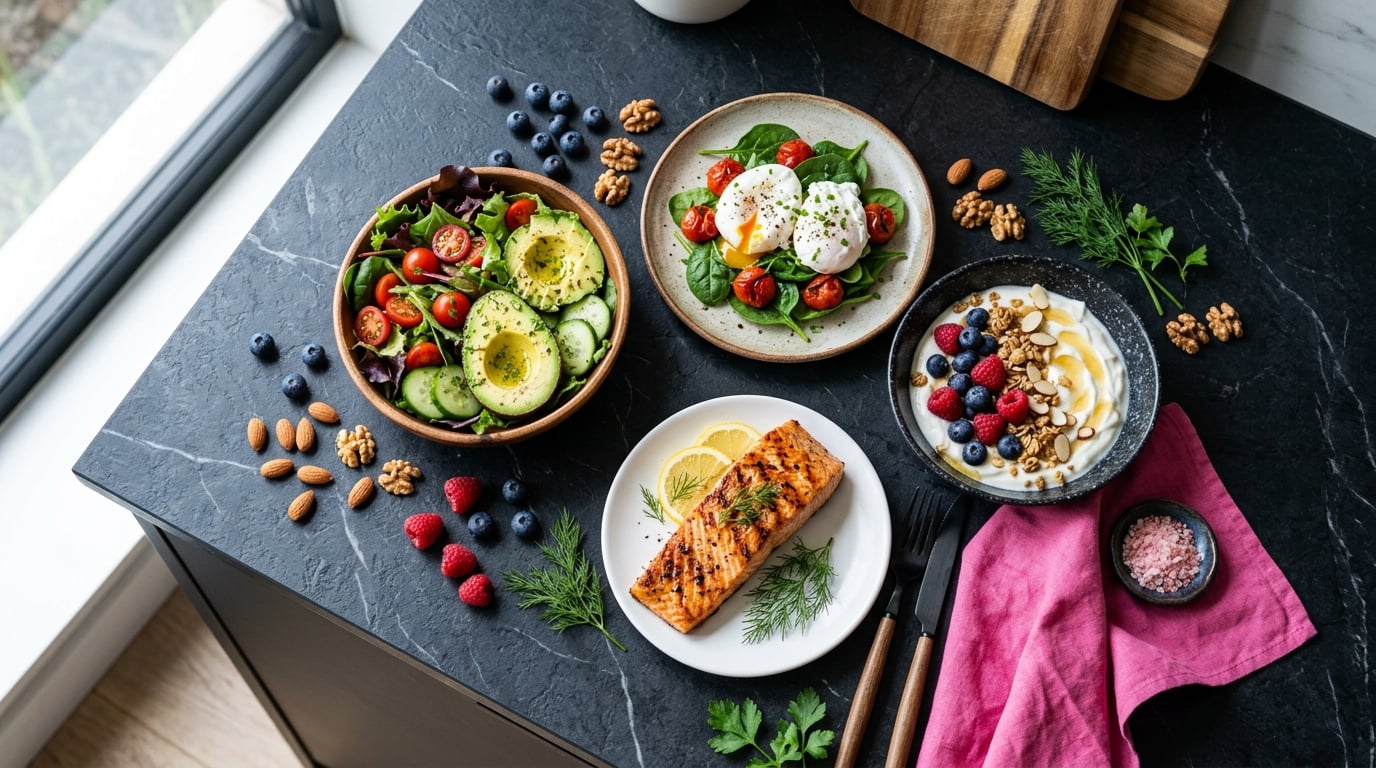
If I could wave a magic wand and change one thing about how women over 40 eat, it wouldn't be cutting carbs. It wouldn't be intermittent fasting. It wouldn't be any trendy supplement. It would be getting more protein.
Protein is, without exaggeration, the single most important nutrient for women in midlife. It protects your muscles, supports your bones, keeps you full, stabilises your blood sugar, and helps your body recover from training. And yet, most women I work with are eating barely half of what they need.
This isn't about protein shakes and chicken breasts six times a day. It's about understanding why protein matters more now than ever, how much you actually need, and practical ways to get it into your daily routine without it feeling like a chore.
Free 7-Day Fat Loss Meal Plan
A printable week of protein-forward meals, shopping list and meal prep guide — designed for women over 40.
🔒 No spam, ever. Unsubscribe anytime.
Why Protein Matters More After 40
As you age — and particularly during perimenopause and menopause — your body becomes less efficient at using protein to build and maintain muscle. Scientists call this "anabolic resistance." It means the same amount of protein that easily maintained your muscle in your twenties simply isn't enough anymore.
At the same time, your natural muscle mass is declining. Without adequate protein and resistance training, you lose muscle progressively — and with it, your metabolism slows, your bones weaken, your joints become less supported, and your risk of falls and fractures increases.
Protein is the raw material your body needs to fight back against these changes. Every time you eat protein, you're giving your muscles the amino acids they need to repair, rebuild, and grow. Combine that with strength training, and you have the most powerful anti-ageing strategy that exists.
How Much Do You Actually Need?
The standard government recommendation of 0.8 grams per kilogram of bodyweight was designed to prevent deficiency in sedentary people. It was never meant to be optimal — especially not for active women over 40 who are strength training.
Current research suggests that women in midlife who train regularly should aim for 1.4 to 2.0 grams of protein per kilogram of bodyweight per day. For a 75 kg woman, that's roughly 105 to 150 grams of protein daily.
If that sounds like a lot compared to what you're currently eating, you're not alone. Most women I work with start at around 50 to 70 grams a day. The key is to increase gradually and spread your intake across the day rather than trying to eat it all in one meal.
Spread It Across the Day
Your body can only use so much protein at once for muscle building — roughly 25 to 40 grams per meal, depending on your size and the protein source. Eating 100 grams of protein in one sitting doesn't give you four times the benefit of eating 25 grams. Your body will use what it can and oxidise the rest for energy.
This means the best strategy is to aim for a solid serve of protein at every meal and most snacks. Think 30 to 40 grams at each main meal and 15 to 20 grams at snack time. Four eating occasions with good protein will get most women to their daily target comfortably.
Best Protein Sources — Real Food First
You don't need to rely on supplements to hit your protein goals, though they can be convenient. Here are some of the best whole-food protein sources and roughly how much protein they provide:
Chicken breast (150g cooked): about 45g protein. One of the most protein-dense foods available. Versatile, affordable, and easy to prep in bulk.
Salmon (150g cooked): about 35g protein. Also packed with omega-3 fatty acids, which support heart health, brain function, and reduce inflammation.
Eggs (2 large): about 12g protein. A perfect breakfast foundation. Add an extra egg white or two to boost the protein without much extra volume.
Greek yoghurt (200g): about 18 to 20g protein. Brilliant as a snack or breakfast base. Choose full-fat or low-fat — either works, pick whichever you prefer.
Lentils (1 cup cooked): about 18g protein. Excellent plant-based option. Also high in fibre, which supports gut health and keeps you full.
Cottage cheese (200g): about 24g protein. Underrated and versatile — eat it with fruit, on toast, or mixed into savoury dishes.
Lean beef mince (150g cooked): about 38g protein. Rich in iron and zinc, both of which are important for energy and immune function in midlife.
What About Protein Supplements?
Protein powders aren't magic, but they are convenient. If you're struggling to hit your daily target through food alone — which is common, especially at the start — a scoop of protein powder can bridge the gap easily.
Whey protein is the gold standard for muscle building because it's rapidly absorbed and rich in leucine, the amino acid that triggers muscle protein synthesis. If you're lactose intolerant or prefer plant-based options, a blended plant protein (pea, rice, and hemp combined) is a solid alternative.
A simple smoothie with a scoop of protein powder, a handful of frozen berries, some spinach, and water or milk gives you 25 to 30 grams of protein in under two minutes. That's a game-changer for busy mornings.
Common Mistakes Women Make With Protein
Skipping protein at breakfast. Toast and coffee might get you through the morning, but it leaves your muscles starving after an overnight fast. Prioritise protein at your first meal — eggs, Greek yoghurt, a protein smoothie, or even leftovers from last night's dinner.
Eating too little overall. Under-eating is rampant among women over 40, often because of years of dieting. If you're not eating enough total calories, your body will break down muscle for energy regardless of how much protein you eat. You need to eat enough to fuel your training and recovery.
Waiting too long after training. While the "anabolic window" isn't as narrow as the fitness industry once claimed, getting a good serve of protein within a couple of hours after training does support recovery. Don't overthink it — just make your next meal protein-rich.
Relying on incomplete sources alone. If you eat plant-based, make sure you're combining different protein sources throughout the day to get all essential amino acids. Beans and rice, lentils and quinoa, tofu and nuts — variety covers the bases.
A Sample Day of High-Protein Eating
Here's what a realistic high-protein day might look like for a woman over 40. This isn't a prescriptive meal plan — it's an example to show that hitting your protein target doesn't require eating like a bodybuilder.
Breakfast: Two-egg omelette with spinach and feta, plus a slice of sourdough toast. (~25g protein)
Morning snack: Greek yoghurt with a handful of almonds and berries. (~20g protein)
Lunch: Chicken and avocado salad with mixed greens, cherry tomatoes, and olive oil dressing. (~40g protein)
Afternoon snack: Protein smoothie with banana, protein powder, and milk. (~28g protein)
Dinner: Grilled salmon with roasted sweet potato and steamed broccoli. (~35g protein)
Daily total: approximately 148g protein. Totally achievable with normal food and one convenient supplement.
The Her Strong Era Approach
At Her Strong Era, protein is a cornerstone of everything I teach. Not because it's trendy, but because the science is clear: women over 40 who prioritise protein alongside strength training build more muscle, lose more fat, recover better, and feel stronger than those who don't.
You don't need to be perfect. You don't need to weigh every gram. Start by adding a palm-sized serve of protein to every meal. Notice how it changes your energy, your fullness, and your recovery. Then adjust from there.
Your body is ready to build. Give it what it needs.
Free 7-Day Fat Loss Meal Plan
A printable week of protein-forward meals, shopping list and meal prep guide — designed for women over 40.
🔒 No spam, ever. Unsubscribe anytime.
Want personalised help with this?
My 1:1 online coaching gives you a fully custom training and nutrition plan built around your goals, your body, and your life. 12 weeks, $69/week, with me in your corner the whole way.
Learn About CoachingFree 7-Day Fat Loss Meal Plan
A printable week of protein-forward meals, shopping list, meal prep guide and tracker — designed for women over 40.