Why Sleep and Recovery Are the Secret to Getting Stronger After 40
Here's something nobody tells you when you start working out in your forties: what you do outside the gym matters just as much — maybe even more — than what you do inside it. And at the top of that list? Sleep and recovery.
I used to wear exhaustion like a badge of honour. Late nights, early alarms, back-to-back training days — I thought that was what dedication looked like. It took me years to understand that rest isn't the opposite of progress. It is progress. Especially after 40, when your body needs more time to repair, rebuild, and adapt to the work you're putting in.
If you've been training consistently but feel stuck — or worse, constantly tired, sore, and unmotivated — the answer probably isn't to push harder. It's to recover smarter.
Free 7-Day Beginner Strength Plan
Three simple full-body dumbbell workouts with form cues, warm-ups and rest days built in — designed for women over 40.
🔒 No spam, ever. Unsubscribe anytime.
Why Recovery Matters More After 40
As we age, several biological shifts make recovery increasingly important. Declining estrogen levels — particularly during perimenopause and menopause — slow muscle repair and increase inflammation. Growth hormone production, which peaks during deep sleep and drives tissue regeneration, naturally decreases with age. Cortisol, your stress hormone, tends to run higher, making it harder for your body to switch into rest-and-repair mode.
None of this means you can't train hard. It means your body needs more intentional recovery to get the same results it used to deliver automatically in your twenties. Think of it like this: training is the stimulus, but recovery is where the actual change happens — where muscles rebuild stronger, where your nervous system resets, where your energy replenishes.
Skip the recovery, and you're essentially tearing something down without ever building it back up.
Sleep: The Most Underrated Performance Tool
If I could give every woman over 40 just one piece of advice, it might genuinely be this: prioritise your sleep above everything else. Not your workout schedule, not your meal prep, not your step count. Sleep.
During deep sleep, your body releases the majority of its growth hormone. This is what repairs damaged muscle fibres, strengthens bones, and supports connective tissue health. It's also when your brain consolidates learning and emotional processing — meaning better mood, sharper focus, and more motivation the next day.
Poor sleep does the opposite. It elevates cortisol, increases cravings for sugary and processed foods, impairs insulin sensitivity (making fat storage more likely), and reduces your ability to recover between sessions. One bad night won't ruin you, but chronically poor sleep will slowly undermine every other healthy habit you have.
Practical Sleep Strategies That Actually Work
I'm not going to tell you to sleep eight hours and leave it at that. I know how hard sleep can be, especially if you're dealing with hot flushes, night sweats, anxiety, or a mind that won't switch off. But there are things that genuinely help:
Create a consistent wind-down routine. Your body craves predictability. Try to go to bed and wake up at roughly the same time every day — yes, even weekends. In the hour before bed, dim the lights, put your phone away, and do something calming. Reading, stretching, a warm shower — anything that signals to your nervous system that the day is done.
Keep your bedroom cool and dark. Your core body temperature needs to drop for deep sleep to happen. A cool room (around 16 to 18 degrees Celsius) and blackout curtains can make a real difference. If hot flushes are an issue, breathable bedding and a fan can help enormously.
Watch your caffeine timing. Caffeine has a half-life of about five to six hours, meaning half of that afternoon coffee is still circulating in your system at bedtime. Try cutting caffeine by midday and see how your sleep responds over a couple of weeks.
Manage evening stress. Journaling for five minutes, a simple breathing exercise, or even writing tomorrow's to-do list can help offload the mental chatter that keeps so many of us staring at the ceiling at midnight.
Active Recovery: What It Is and Why You Need It
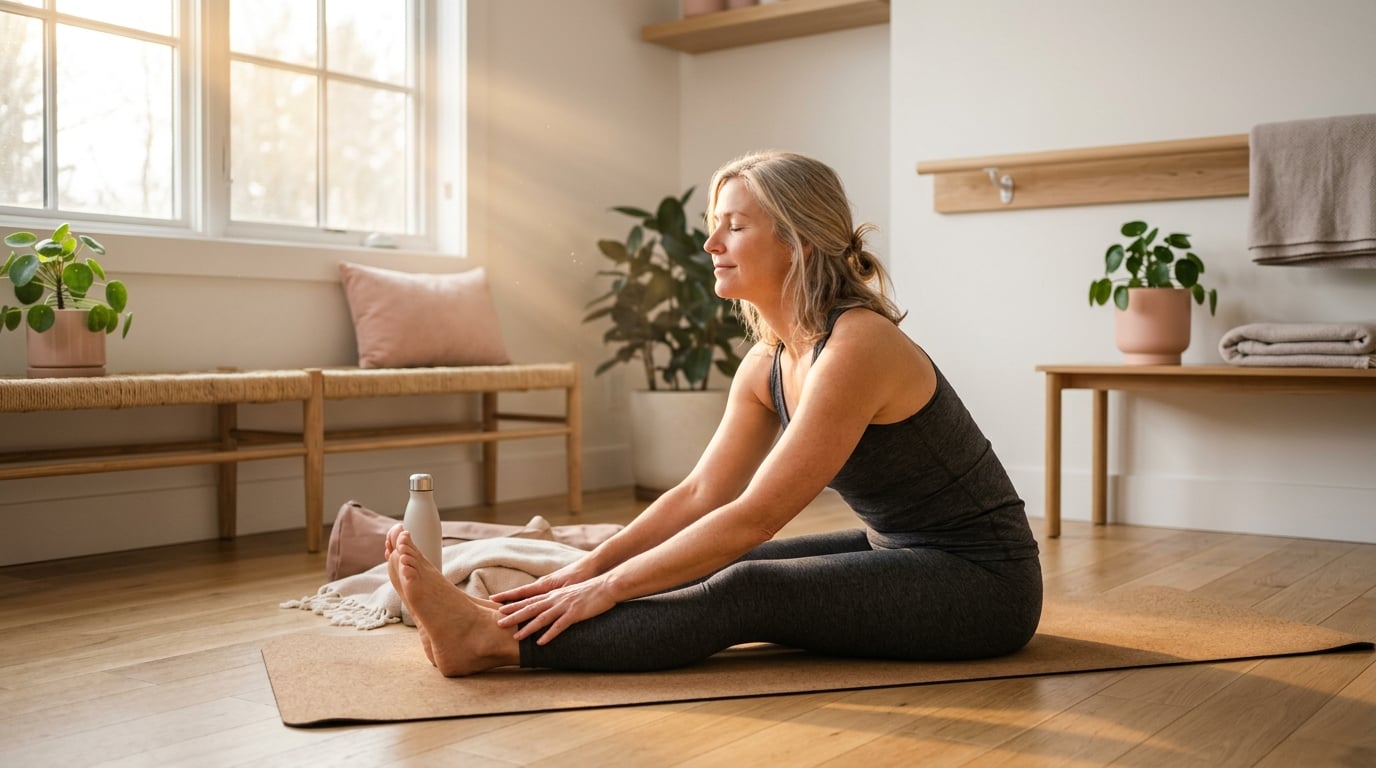
Recovery doesn't mean doing nothing. Active recovery means low-intensity movement that promotes blood flow, reduces muscle stiffness, and supports your nervous system without adding training stress. Think gentle walking, light stretching, yoga, swimming, or even a leisurely bike ride.
These activities help shuttle nutrients to recovering muscles, clear metabolic waste products, and keep you mobile without taxing your body further. They also support your mental health — sometimes the best thing for a restless mind is a twenty-minute walk in fresh air, not another high-intensity session.
I programme active recovery days into every plan I write, and I treat them as non-negotiable. They're not "lazy days." They're strategic days that make your hard training days actually count.
Rest Days: Permission to Do Nothing
Beyond active recovery, you need genuine rest days — days where you don't train at all. For most women over 40 training three to four times a week, that means three to four rest days. And no, that's not too many.
Rest days are when adaptation happens. Your muscles repair micro-tears from training, your tendons and ligaments strengthen, and your central nervous system recovers from the demands of lifting, balancing, and coordinating. Without adequate rest, you accumulate fatigue faster than you can recover from it — a state called overtraining that leads to plateaus, injuries, hormonal disruption, and burnout.
If you feel guilty about rest days, I want to challenge that mindset. Rest is not laziness. Rest is what makes you stronger. The fittest, most resilient women I know are the ones who rest unapologetically.
Signs You're Not Recovering Enough
Your body is constantly giving you feedback — the question is whether you're listening. Here are some common signs that your recovery isn't keeping up with your training:
Persistent fatigue that doesn't improve with a good night's sleep. Increased muscle soreness that lasts longer than usual. Feeling unmotivated or dreading workouts you normally enjoy. Getting sick more often — a sign your immune system is under strain. Disrupted sleep, even when you're tired. Irritability, mood swings, or feeling emotionally flat. Plateauing or regressing in your strength or fitness despite consistent training.
If several of these resonate, it's not a sign to push harder. It's a sign to pull back, rest more, sleep better, and let your body catch up.
Nutrition for Recovery
What you eat after training directly affects how well you recover. Protein is essential — it provides the amino acids your muscles need to repair and grow. Aim for a good protein source within a couple of hours of training, and spread your intake across the day. Carbohydrates replenish glycogen stores and support energy levels. Don't fear them — they're fuel, not the enemy.
Hydration matters more than most people realise, especially during menopause when your body's hydration regulation can shift. And micronutrients — magnesium, zinc, vitamin D, omega-3 fatty acids — all play roles in muscle recovery, sleep quality, and inflammation management. Eating a varied, colourful diet with enough overall calories is the simplest way to cover your bases.
The Her Strong Era Approach to Recovery
At Her Strong Era, recovery isn't an afterthought — it's built into the foundation. Every programme balances training with rest. Every plan accounts for the reality that women over 40 have different recovery needs than women in their twenties. And every conversation I have with my clients includes a reminder that rest is productive.
You don't earn rest by burning yourself out. You use rest to become the strongest, most energised version of yourself. Sleep well. Move gently on your off days. Eat enough. And trust that your body is doing incredible work even when you're not in the gym.
That's not weakness. That's wisdom. And it's the kind of training that lasts a lifetime.
Free 7-Day Beginner Strength Plan
Three simple full-body dumbbell workouts with form cues, warm-ups and rest days built in — designed for women over 40.
🔒 No spam, ever. Unsubscribe anytime.
Want personalised help with this?
My 1:1 online coaching gives you a fully custom training and nutrition plan built around your goals, your body, and your life. 12 weeks, $69/week, with me in your corner the whole way.
Learn About CoachingFree 7-Day Fat Loss Meal Plan
A printable week of protein-forward meals, shopping list, meal prep guide and tracker — designed for women over 40.