Strong Bones After 40: Protecting Your Bone Density
There's a health topic that almost nobody talks about until something goes wrong — and by then, it's much harder to fix. I'm talking about your bones. Specifically, your bone density, and why the years around and after 40 are the most important window you'll ever have to protect it. This isn't the most glamorous subject, but it might just be one of the most important things I ever teach you.
Here's why it matters so much: after menopause, women can lose bone density rapidly, and osteoporosis — the silent thinning of the bones — affects a huge number of women as they age. It's called "silent" because you often can't feel it happening. The first sign is frequently a fracture. But here's the empowering part: you have enormous power to protect and even build your bones, and the best time to start is right now.
Free Protein Cheat Sheet
Your daily protein target, the protein in 40+ everyday foods, and 25 easy high-protein snacks — all on one printable page.
🔒 No spam, ever. Unsubscribe anytime.
What Happens to Your Bones After 40
Your bones are living, dynamic tissue — constantly being broken down and rebuilt throughout your life. In your younger years, you build more than you lose, reaching peak bone mass in your late 20s. From there it's a slow, gentle decline — until perimenopause and menopause, when falling oestrogen accelerates bone loss significantly. Oestrogen is powerfully protective of bone, and as it drops, the rate of breakdown speeds up.
This is why the woman in her 40s and 50s is at such a pivotal moment. The habits you build now determine how strong your skeleton will be for the decades ahead. You're not too late — you're right on time.
The Single Best Thing You Can Do: Lift Weights
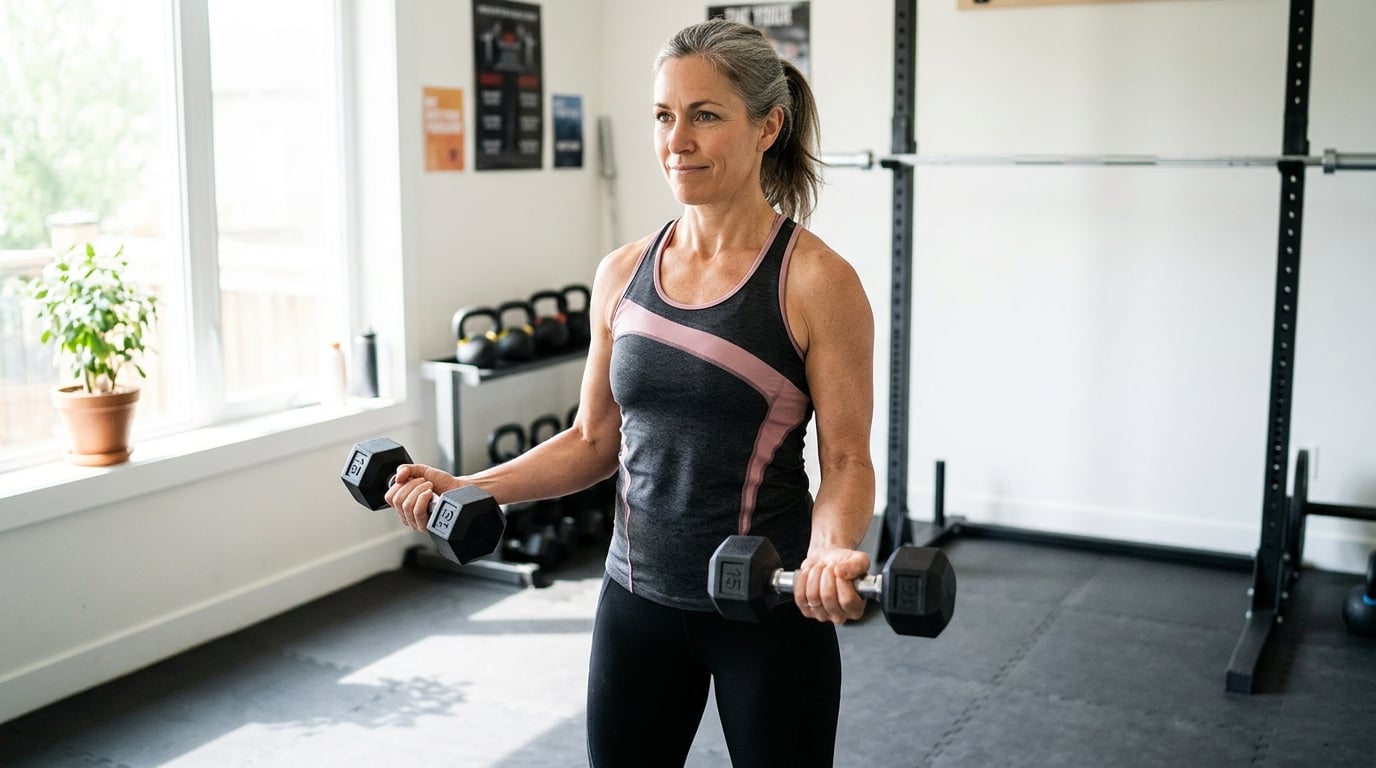
If there's one message I want you to take from this article, it's this: strength training is the most powerful tool you have for protecting your bones. When your muscles pull on your bones under resistance, it signals your body to lay down new bone tissue, making them denser and stronger. It's the closest thing we have to a magic bullet for bone health.
Bodyweight exercises, dumbbells, resistance bands, and machines all count. The key is progressive resistance — gradually challenging your muscles and bones over time. Squats, lunges, deadlifts, presses, and rows are all fantastic bone-builders. Two to three strength sessions a week is a brilliant, achievable target.
Weight-Bearing Movement Matters Too
Beyond lifting, weight-bearing activities — where you're on your feet supporting your own body weight — also stimulate bone. Walking, hiking, dancing, stair climbing, and jogging (if your joints are happy with it) all send that helpful "get stronger" signal to your skeleton. Swimming and cycling are wonderful for your heart and joints, but because they're not weight-bearing, they don't build bone in the same way. So make sure you include plenty of on-your-feet movement.
The Nutrition Your Bones Need
Calcium
Calcium is the raw material of bone. Aim to get it primarily from food: dairy, tinned fish with soft bones (like sardines and salmon), leafy greens, tofu, and fortified foods. Most women over 40 benefit from paying real attention to this.
Vitamin D
Vitamin D is essential because it allows your body to actually absorb the calcium you eat. Many women are deficient, especially in cooler climates. Sunlight, oily fish, and often a supplement (check with your doctor) help keep your levels where they need to be.
Protein
Around half of your bone is made of protein. Getting enough protein supports both your bones and the muscle that protects them. This is yet another reason protein sits at the heart of everything I teach women over 40.
Balance Training: The Fracture Preventer
Here's a crucial point people miss: protecting your bones is only half the equation. The other half is not falling in the first place. Most serious fractures happen because of a fall, so training your balance is a direct investment in fracture prevention. Simple daily practice — single-leg stands, heel-to-toe walking, sit-to-stands — dramatically reduces your fall risk as you age. Strong bones plus good balance is the winning combination.
Habits That Quietly Harm Your Bones
A few things work against your bones, and they're worth knowing. Smoking accelerates bone loss significantly. Excessive alcohol interferes with bone-building. Very low body weight and crash dieting deprive bones of the resources they need. And a sedentary lifestyle — the opposite of the loading your bones crave — lets them weaken. The good news is that every one of these is within your power to change.
Know Your Numbers
If you're over 40, especially if you're postmenopausal or have risk factors like a family history of osteoporosis, it's worth talking to your doctor about a bone density scan (often called a DEXA scan). It's quick, painless, and gives you a clear baseline so you know exactly where you stand and can track your progress. Knowledge is power when it comes to your bones.
The Bottom Line
Your bones are the framework that carries you through life, and the years after 40 are your golden window to protect them. Lift weights, stay on your feet, eat enough calcium, vitamin D, and protein, train your balance, and steer clear of the habits that undermine your skeleton. None of this is complicated, and all of it is within your reach.
The woman who invests in her bones today is giving her future self the priceless gift of independence, confidence, and freedom of movement for decades to come. It's never too late and never too early to start. Your strong era is built on a strong frame — let's protect it together.
Free Protein Cheat Sheet
Your daily protein target, the protein in 40+ everyday foods, and 25 easy high-protein snacks — all on one printable page.
🔒 No spam, ever. Unsubscribe anytime.
Want personalised help with this?
My 1:1 online coaching gives you a fully custom training and nutrition plan built around your goals, your body, and your life. 12 weeks, $69/week, with me in your corner the whole way.
Learn About CoachingFree 7-Day Fat Loss Meal Plan
A printable week of protein-forward meals, shopping list, meal prep guide and tracker — designed for women over 40.