Why Walking Is the Most Underrated Fat Loss Tool After 40
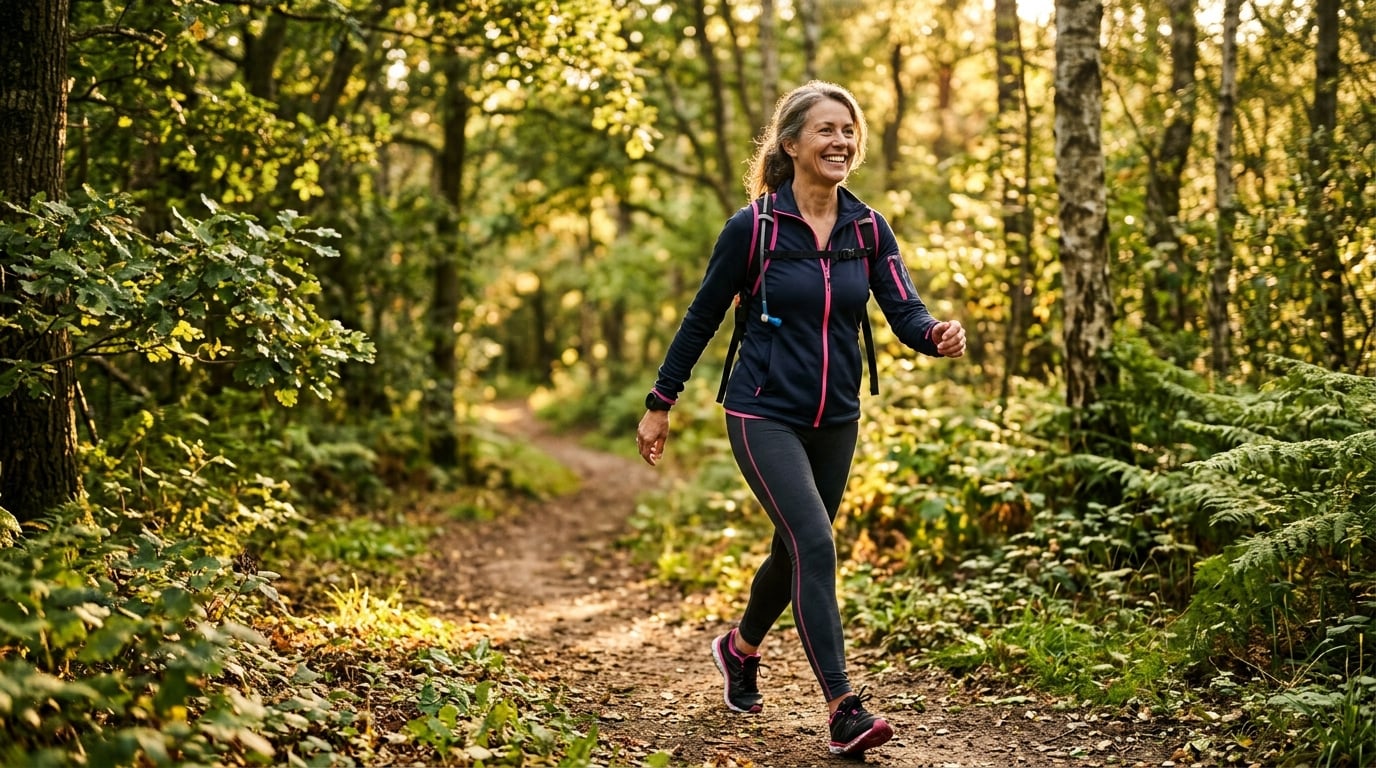
Let me tell you something that might surprise you: the most underrated fat loss tool for women over 40 isn't a HIIT class, a detox tea, or a fancy supplement. It's walking. Plain, simple, boring-sounding walking.
I know, I know. It doesn't sound sexy. It doesn't promise six-pack abs in 30 days. But here's what it does promise: sustainable fat loss, better hormone balance, improved mental health, and results that actually last. And as someone who coaches women in midlife every single day, I can tell you it's the one habit that separates the women who get lasting results from those who burn out.
Free 7-Day Beginner Strength Plan
Three simple full-body dumbbell workouts with form cues, warm-ups and rest days built in — designed for women over 40.
🔒 No spam, ever. Unsubscribe anytime.
Why Walking Is Especially Powerful After 40
As we move through our 40s and into perimenopause and menopause, our bodies become more sensitive to stress. And intense exercise — while valuable — is a stressor. High-intensity training spikes cortisol. When cortisol is chronically elevated (which it often is in busy, sleep-deprived midlife women), it promotes fat storage, particularly around the midsection, disrupts sleep, and increases inflammation.
Walking does the opposite. It lowers cortisol. It activates your parasympathetic nervous system — the rest-and-digest mode that helps your body recover, regulate hormones, and release stored fat. It's movement that supports your hormonal environment rather than fighting against it.
This doesn't mean you should stop lifting. Strength training is non-negotiable. But pairing your strength sessions with daily walking creates a powerful combination: the muscle-building, metabolism-boosting benefits of resistance training, plus the low-stress fat-burning benefits of consistent walking.
The Science Behind Walking for Fat Loss
Walking burns calories primarily from fat. Unlike high-intensity exercise, which relies heavily on glycogen (stored carbohydrates), walking at a moderate pace keeps you in a fat-oxidation zone. Your body preferentially uses fat as fuel during low-intensity, steady-state movement.
But the real magic is in something called NEAT — Non-Exercise Activity Thermogenesis. This is the energy you burn doing everything that isn't formal exercise: walking to the shops, taking the stairs, pottering around the house. Research shows that NEAT can account for up to 15-30% of your total daily energy expenditure. For most women, increasing NEAT through walking has a bigger impact on fat loss than adding another gym session.
A brisk 30-minute walk burns roughly 150-200 calories depending on your weight and pace. Do that daily and you're looking at an extra 1,000-1,400 calories burned per week — without any impact on your joints, recovery, or stress levels. Over a month, that adds up significantly.
How Many Steps Should You Actually Aim For?
The 10,000 steps goal that gets thrown around everywhere? It wasn't based on science — it came from a Japanese marketing campaign for a pedometer in the 1960s. That said, research has since validated that more steps generally correlate with better health outcomes.
Here's what the evidence actually suggests:
- 7,000-8,000 steps per day is associated with significant reductions in all-cause mortality
- 8,000-10,000 steps is the sweet spot for most women wanting fat loss benefits alongside their strength training
- Beyond 10,000 steps, the additional benefits plateau — so don't stress about hitting 15K
If you're currently at 3,000 steps a day, don't try to jump to 10,000 overnight. Add 1,000 steps per week until you find a sustainable target. For most of my clients, 7,500-8,500 steps is realistic, achievable, and highly effective.
How to Fit More Walking Into a Busy Life
The biggest barrier to walking isn't willpower — it's logistics. Busy women don't have a spare hour every day to go for a scenic stroll. I get it. So here's how to build steps into your existing life:
Morning walk (15-20 minutes): Before you check emails, before the chaos starts, get outside. Even a lap around the block counts. Morning light exposure also helps regulate your circadian rhythm, which improves sleep and hormone balance — a double win.
Walking meetings and phone calls: If you work from home or have flexibility, take calls while walking. I do this with clients all the time and the conversations are often better when you're moving.
Post-meal walks (10 minutes): A short walk after lunch or dinner is one of the most powerful blood sugar management tools available. Research shows a 10-minute walk after eating can reduce blood sugar spikes by up to 30%. This matters enormously for women in midlife dealing with insulin resistance.
Park further away: Simple but effective. Whether it's the supermarket, the school pickup, or work — parking 5 minutes further away adds 10 minutes of walking to your day without any extra time commitment.
Weekend walks: One longer walk on the weekend — 30 to 60 minutes — is a beautiful way to decompress, get nature exposure, and rack up extra steps. Bring a friend or put on a podcast and make it something you look forward to.
Walking and Mental Health
Let's not underestimate this. Midlife is hard. Between hormonal changes, career pressures, caring for ageing parents, raising teenagers, and everything else life throws at you — your mental health deserves attention.
Walking has been shown to reduce symptoms of anxiety and depression. A study from Harvard found that just 15 minutes of walking per day reduced the risk of major depression by 26%. It clears your head, gives you space to process emotions, and triggers the release of endorphins and serotonin — your natural mood boosters.
Many of my clients tell me their daily walk has become the most important part of their routine. Not because of the calorie burn, but because of how it makes them feel. Calmer, clearer, more grounded. In a season of life where everything feels like it's shifting, that mental anchor is priceless.
Common Walking Mistakes
Don't replace your strength training with walking. Walking is a complement to resistance training, not a substitute. You need both. Think of walking as the base layer of your movement and strength training as the power layer.
Don't walk so fast that it becomes stressful. If you're power-walking to the point of breathlessness, you're pushing into moderate-to-high intensity territory. Keep it conversational. You should be able to talk comfortably while walking. That's the zone where fat burning is highest and stress is lowest.
Don't ignore footwear. As we age, foot mechanics change. Supportive, well-fitting shoes matter more than ever. If you're walking 7,000+ steps daily, invest in a decent pair of walking shoes. Your knees, hips, and back will thank you.
Putting It All Together
Here's what a great week looks like for a woman over 40 who wants to lose fat and feel amazing:
- 3 strength training sessions (30-45 minutes each)
- 7,500-8,500 steps daily (accumulated throughout the day)
- 1-2 longer walks on weekends (30-60 minutes)
- Post-meal walks when possible (10 minutes after lunch or dinner)
That's it. No two-a-days. No 6am boot camps. No punishing yourself on a treadmill. Just smart, sustainable movement that works with your body instead of against it.
Walking is free. It's accessible. It's gentle on your joints. And it works. Start tomorrow morning with a 15-minute walk before your day begins. Track your steps for a week and see where you're at. Then build from there.
Your strong era doesn't always look like heavy barbells and intense sweat sessions. Sometimes it looks like a morning walk in the sunshine, one step at a time.
Free 7-Day Beginner Strength Plan
Three simple full-body dumbbell workouts with form cues, warm-ups and rest days built in — designed for women over 40.
🔒 No spam, ever. Unsubscribe anytime.
Want personalised help with this?
My 1:1 online coaching gives you a fully custom training and nutrition plan built around your goals, your body, and your life. 12 weeks, $69/week, with me in your corner the whole way.
Learn About CoachingFree 7-Day Fat Loss Meal Plan
A printable week of protein-forward meals, shopping list, meal prep guide and tracker — designed for women over 40.