
Anti-Inflammatory Foods to Eat Every Week (and What to Limit)
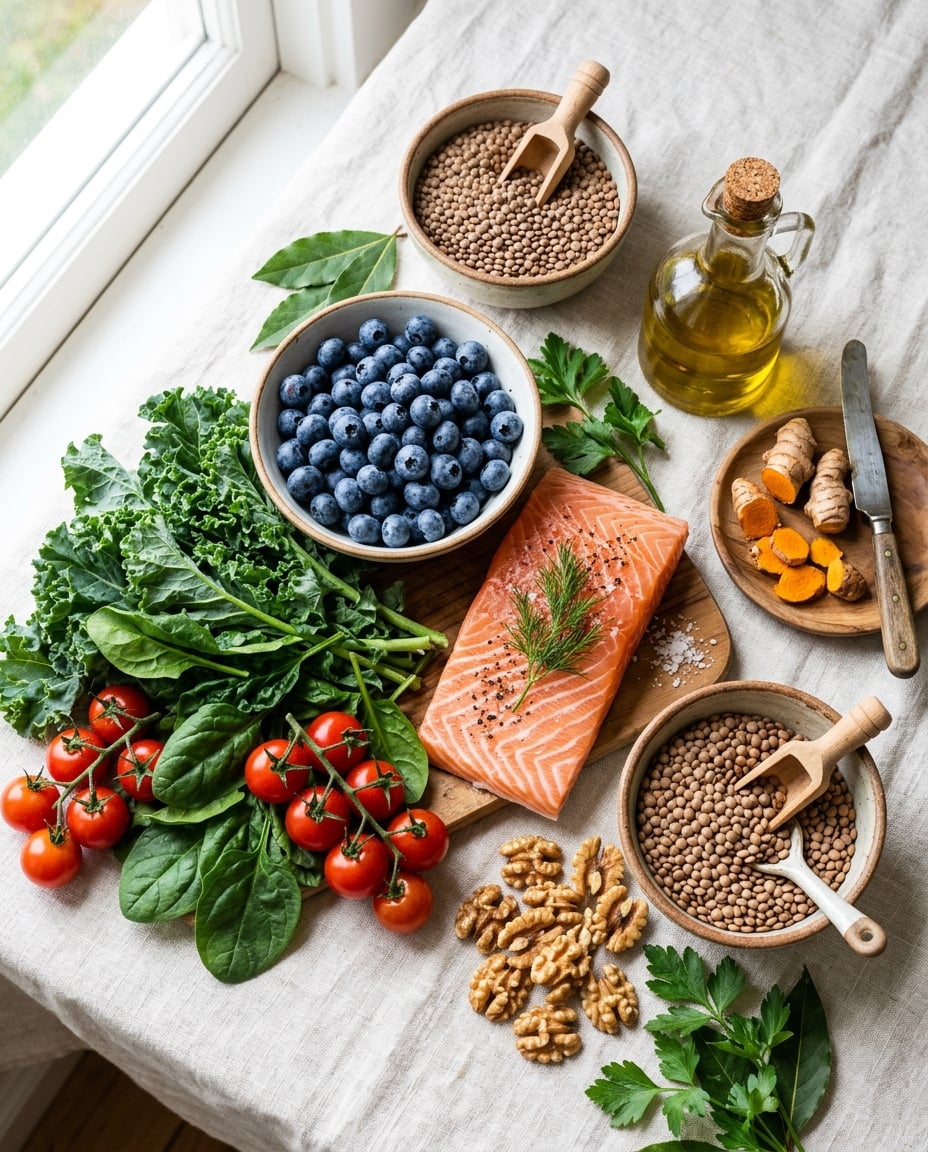
If there's one shift that quietly changes how women feel in their 40s and 50s — in their joints, their energy, their mood, even their waistline — it's calming the low-grade inflammation that tends to creep up as our hormones change. And the loveliest part? You don't need a special diet, expensive supplements or any deprivation. You just need to fill your plate with more of the right foods, more often. So here's your simple, save-worthy list of anti-inflammatory foods to eat every week — plus the handful worth limiting.
Free 7-Day Fat Loss Meal Plan
A printable week of protein-forward meals, shopping list and meal prep guide — designed for women over 40.
🔒 No spam, ever. Unsubscribe anytime.
A quick word on inflammation
Inflammation itself isn't the villain — it's your body's brilliant repair response. The trouble comes when it becomes chronic and low-grade, simmering away in the background for years. This kind of inflammation rises naturally as oestrogen falls in midlife, and it's linked to stubborn weight, achy joints, poor sleep, low mood and brain fog. The good news: your plate is one of the most powerful tools you have to settle it down.
The anti-inflammatory foods to eat every week
1. Berries — especially blueberries
Those deep blue and purple pigments are anthocyanins, powerful antioxidants that mop up the damage driving inflammation. Wonderful stirred through your morning yoghurt or added to porridge. Fresh or frozen both count.
2. Oily fish — salmon & sardines
Salmon, sardines, mackerel and trout are rich in omega-3 fatty acids — some of the most powerful anti-inflammatory compounds we know of. They support your joints, brain and heart. Aim for two or three portions a week. Not a fish eater? A quality algae-based omega-3 is a sensible alternative.
3. Dark leafy greens
Spinach, kale and rocket are packed with antioxidants and magnesium. Add a handful to almost anything — eggs, soups, pasta, smoothies. The more colour and variety across your week, the better.
4. Extra virgin olive oil
A staple of the Mediterranean way of eating for good reason. It contains a natural compound called oleocanthal that behaves in the body a little like a gentle anti-inflammatory. Use it generously for dressings and everyday cooking.
5. Turmeric & ginger
These warming spices have genuine anti-inflammatory properties and make food taste wonderful. A cup of ginger tea, a turmeric-spiced soup, or fresh ginger grated into a stir-fry — small, delicious habits that add up.
6. Walnuts & almonds
A small daily handful delivers healthy fats and fibre that help lower inflammatory markers. Perfect as a snack or scattered over yoghurt and salads.
7. Beans & lentils
Fibre feeds the friendly bacteria in your gut, and those bacteria produce compounds that calm inflammation throughout the body. Lentils, chickpeas and beans also keep your blood sugar steady — and blood sugar spikes are themselves inflammatory.
The foods worth limiting
You don't need to be perfect or cut anything out entirely — life is for living, and a treat is a treat. But these are the ones that tend to fan the flames of inflammation, so it's worth keeping them occasional rather than everyday:
- Refined sugar — the biggest driver of blood sugar spikes and inflammation.
- Processed meats — sausages, bacon and deli meats eaten regularly.
- Highly refined seed oils — found in most fried and heavily processed foods.
- White bread & pastries — refined carbs that spike blood sugar quickly.
- Alcohol — fine occasionally, but it adds to the inflammatory load.
A day of anti-inflammatory eating
Here's how effortlessly it comes together — nothing fancy, nothing joyless:
- Breakfast: Greek yoghurt with a handful of blueberries, a sprinkle of walnuts and a dusting of cinnamon.
- Lunch: A big colourful salad with leaves, tomatoes, chickpeas and avocado, dressed with olive oil, alongside some tinned salmon or mackerel.
- Dinner: A lentil and vegetable soup, or roasted salmon with greens and sweet potato.
- Snack: A small handful of almonds, or apple slices with nut butter.
Small, consistent, delicious
Please don't feel you have to overhaul everything overnight. Pick two or three of these foods to add in this week — maybe berries with breakfast, olive oil on your salads, and fish twice — and build gently from there. Anti-inflammatory eating isn't a strict diet with a start and end date. It's simply a warm, colourful, sustainable way of feeding yourself that happens to make you feel dramatically better.
Save this list, take it to the supermarket, and let it fill your trolley with foods that love you back. Your joints, your energy and your mood will notice — often sooner than you'd expect. 💛
Free 7-Day Fat Loss Meal Plan
A printable week of protein-forward meals, shopping list and meal prep guide — designed for women over 40.
🔒 No spam, ever. Unsubscribe anytime.
Want personalised help with this?
My 1:1 online coaching gives you a fully custom training and nutrition plan built around your goals, your body, and your life. 12 weeks, $69/week, with me in your corner the whole way.
Learn About CoachingFree 7-Day Fat Loss Meal Plan
A printable week of protein-forward meals, shopping list, meal prep guide and tracker — designed for women over 40.