Better Posture After 40: Simple Ways to Stand Tall and Feel Confident
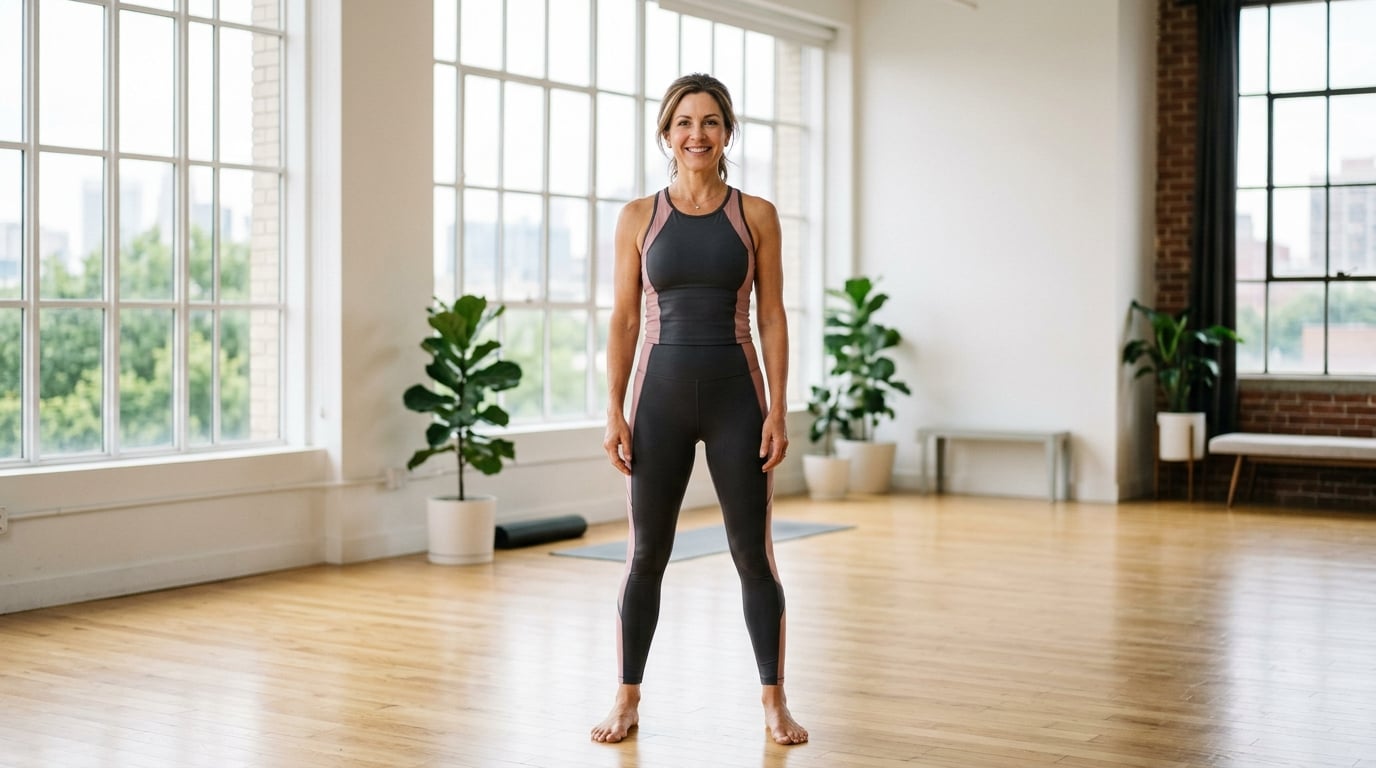
Catch a glimpse of yourself in a shop window and notice your shoulders rounding forward. That nagging ache between your shoulder blades by the end of the day. A neck that feels tight and stiff after hours at a screen. If this sounds familiar, you are absolutely not alone — and I have wonderful news. Posture is not something you are simply stuck with. It is a skill and a strength you can rebuild at any age, and doing so is one of the most transformative things you can do for how you look, move and feel after 40.
Good posture is not about standing to attention like a soldier or holding yourself rigid. It is about your body being able to stack and support itself with ease, so that no single area is left straining to hold you up. When your posture improves, the changes ripple outward: less pain, easier breathing, more confidence, and yes — you genuinely look taller, leaner and more assured. Let me show you why posture drifts in midlife, and exactly how to reclaim it.
Free 7-Day Beginner Strength Plan
Three simple full-body dumbbell workouts with form cues, warm-ups and rest days built in — designed for women over 40.
🔒 No spam, ever. Unsubscribe anytime.
Why Posture Changes After 40
A few things quietly conspire against us as the years go by:
- Decades of sitting and screens. Hours hunched over phones, laptops and steering wheels gradually shorten the muscles at the front of the body and weaken those across the back.
- Muscle loss. From our forties we naturally lose muscle unless we actively maintain it — and the postural muscles that hold us upright are among the first to weaken.
- Falling oestrogen and bone changes. As oestrogen declines, bone density can decrease, which over time can affect the curve of the upper spine if we are not looking after our strength.
- Simply not thinking about it. Posture is a habit, and most of us have spent years unconsciously practising the slumped version.
The reassuring truth underneath all of this: muscles respond to training at every age, and the postural improvements can come surprisingly quickly once you start.
The Posture Trio: Where Things Go Wrong
Most midlife posture issues show up in three linked places. When you understand them, the fix becomes obvious:
- Rounded shoulders. The chest muscles tighten and the upper-back muscles weaken, pulling the shoulders forward.
- Forward head, or "tech neck." The head drifts forward of the shoulders, and because a human head is heavy, this loads the neck and upper back enormously.
- A weak core and sleepy glutes. When the deep core and the muscles of the hips switch off, the lower back and posture suffer.
Simple Exercises to Stand Tall Again
You do not need a gym for any of this. A few minutes most days will create real change. Move gently, never into pain, and focus on feeling the right muscles work.
1. Chin Tucks (for tech neck)
Sitting or standing tall, gently draw your chin straight back, as though making a double chin. You should feel a lengthening at the back of your neck. Hold for a few seconds and release. Do ten, several times a day. This is the single best antidote to hours at a screen.
2. Wall Angels (for rounded shoulders)
Stand with your back against a wall, feet a little forward, and press your lower back, upper back and head lightly to the wall. Raise your arms into a goalpost shape and slowly slide them up and down, keeping contact with the wall. This opens the chest and wakes up the upper back beautifully.
3. Rows (to strengthen the upper back)
Using a resistance band or a pair of light dumbbells, pull your elbows back and squeeze your shoulder blades together, as if tucking them into your back pockets. Strong upper-back muscles are what hold your shoulders where they belong. Aim for two or three sets a few times a week.
4. Glute Bridges (for the foundation)
Lie on your back, knees bent, feet flat. Press through your heels and lift your hips, squeezing your glutes at the top. Strong glutes support your pelvis and lower back, the base of good posture.
5. Chest Opener Stretch
Stand in a doorway, forearms on the frame, and step gently forward to feel a stretch across your chest. Hold for thirty seconds. This releases the tight front-of-body muscles that pull you into a slump.
The Daily Habits That Matter Most
Exercises rebuild the strength, but your everyday habits are where posture is truly won or lost:
- Set up your screen at eye level. Raise your laptop or monitor so you are not looking down all day.
- Take movement breaks. Every 30 to 45 minutes, stand, roll your shoulders back and reset. Posture loves movement, not stillness.
- Think "tall and open." A gentle cue — crown of the head lifting, chest softly open — is worth more than forcing yourself rigid.
- Strengthen regularly. Two or three short strength sessions a week keep the postural muscles strong for the long term.
Why This Is Worth It
Improving your posture is about so much more than appearance, though standing tall genuinely does make you look more confident and years younger. Good posture eases neck and back pain, lets you breathe more fully, protects your spine as you age, and even affects how you feel — it is hard to feel small and uncertain when your body is open and upright.
Your Gentle First Step
Do not try to do everything at once. This week, pick just two things: do ten chin tucks whenever you make a cup of tea, and set a reminder to reset your shoulders every hour. That is it. Small, repeatable, doable.
Your posture has been shaped by decades of habit — and that means it can be reshaped too. Every chin tuck, every row, every moment you choose to stand tall is a vote for a stronger, more comfortable, more confident you. It is never too late to stand tall in your strong era. Your future self, moving with ease and holding her head high, will thank you.
Free 7-Day Beginner Strength Plan
Three simple full-body dumbbell workouts with form cues, warm-ups and rest days built in — designed for women over 40.
🔒 No spam, ever. Unsubscribe anytime.
Want personalised help with this?
My 1:1 online coaching gives you a fully custom training and nutrition plan built around your goals, your body, and your life. 12 weeks, $69/week, with me in your corner the whole way.
Learn About CoachingFree 7-Day Fat Loss Meal Plan
A printable week of protein-forward meals, shopping list, meal prep guide and tracker — designed for women over 40.