
Calcium-Rich Foods for Strong Bones After 40 (and the Nutrients That Help)
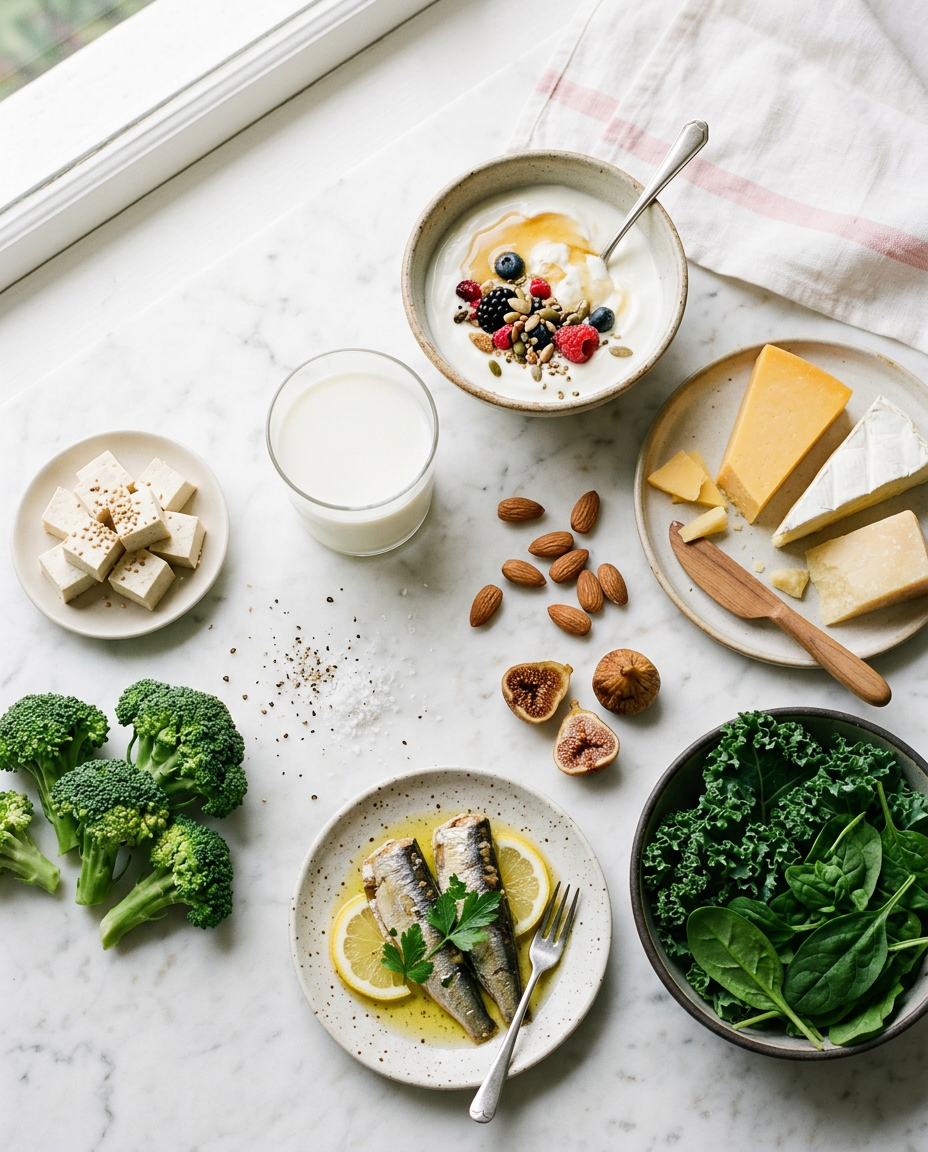
Here's something I wish every woman knew the moment she turned 40: this is the decade to get serious — and joyful — about protecting your bones. From around midlife, and especially as we move towards and through menopause, our bone density can start to decline more quickly. But here's the empowering part: what you eat (and how you move) makes a genuine, measurable difference. And it starts on your plate.
Calcium is the headline act for strong bones, but it doesn't work alone. Let me walk you through the best calcium-rich foods, the nutrients that help calcium do its job, and how to build bone-strengthening meals without a supplement in sight. Save this list for your next food shop! 💛
Free 7-Day Fat Loss Meal Plan
A printable week of protein-forward meals, shopping list and meal prep guide — designed for women over 40.
🔒 No spam, ever. Unsubscribe anytime.
Why bones need extra love after 40
Oestrogen helps protect our bones, and as it declines through perimenopause and menopause, we lose that protection — which is why bone health becomes so important now. Getting enough calcium, alongside vitamin D and protein and regular strength work, is one of the very best things you can do to keep your skeleton strong, reduce your risk of fractures, and stay active and independent for decades to come.
How much calcium do you need?
Most women over 40 should aim for around 1,000–1,200mg of calcium a day. That sounds like a lot, but it comes together beautifully when you spread calcium-rich foods across your meals. A pot of yoghurt here, a serving of greens there, a little cheese — it adds up quickly and deliciously.
My favourite calcium-rich foods
Here's your save-worthy list, with rough calcium amounts so you can mix and match to hit your target.
- Natural or Greek yoghurt (170g pot) — around 200–250mg, plus protein for muscle.
- Milk (one glass, 200ml) — around 240mg. Dairy or fortified plant milk both count.
- Cheese (a small matchbox-sized piece) — around 200mg. A little goes a long way.
- Tinned sardines (with the bones, 100g) — around 380mg, plus omega-3s and vitamin D — a true bone superfood.
- Tofu (calcium-set, 100g) — around 200–350mg. Brilliant for plant-based eaters.
- Kale and other leafy greens (a cooked cup) — around 90–180mg, and full of vitamin K for bones.
- Broccoli (a cup) — around 60mg, plus a lovely dose of other nutrients.
- Almonds (a small handful) — around 75mg, with protein and healthy fats too.
- Dried figs (a few) — around 80–100mg. A naturally sweet, bone-friendly snack.
- Fortified foods — many plant milks, cereals and orange juices have calcium added; check the label.
Calcium's essential helpers
Calcium can't build strong bones on its own — it needs a few key partners:
- Vitamin D helps your body actually absorb the calcium you eat. Get some sunlight, eat oily fish and eggs, and consider a supplement in the darker months (do ask your GP).
- Protein forms the very framework your bones are built on — so keep it in every meal.
- Vitamin K (in leafy greens) helps direct calcium into your bones where it belongs.
- Magnesium (in nuts, seeds and wholegrains) plays a supporting role too.
This is exactly why a varied, colourful diet works so beautifully — the nutrients team up and help each other along.
A day of bone-strong eating
Here's how effortlessly 1,000mg+ comes together:
- Breakfast: Greek yoghurt with berries, almonds and a sprinkle of chia.
- Lunch: A big salad with leafy greens, tinned sardines and a little cheese.
- Dinner: Tofu or salmon stir-fry with broccoli and greens.
- Snack: A glass of milk, or a few dried figs with a handful of almonds.
Don't forget to move
Food builds the raw materials, but your bones grow stronger when you give them a reason to. Weight-bearing and strength exercises — walking, dancing, lifting weights, resistance work — send a signal to your bones to hold onto their density. Pairing calcium-rich eating with regular strength training is the real winning combination. Your bones respond to being used, at absolutely any age.
Little and often
You really don't need to change everything at once. This week, simply add in two or three of these foods — perhaps yoghurt at breakfast, greens with lunch, and sardines on toast for an easy dinner — and build from there. Small, consistent choices, day after day, are what keep your bones strong for life.
Print this list, stick it on the fridge, and take it with you to the shops. Looking after your bones now is one of the most loving things you can do for your future self — the woman who's still hiking, dancing and picking up her grandchildren with confidence for many years to come. 💛
Free 7-Day Fat Loss Meal Plan
A printable week of protein-forward meals, shopping list and meal prep guide — designed for women over 40.
🔒 No spam, ever. Unsubscribe anytime.
Want personalised help with this?
My 1:1 online coaching gives you a fully custom training and nutrition plan built around your goals, your body, and your life. 12 weeks, $69/week, with me in your corner the whole way.
Learn About CoachingFree 7-Day Fat Loss Meal Plan
A printable week of protein-forward meals, shopping list, meal prep guide and tracker — designed for women over 40.