
Collagen-Boosting Foods That Actually Work After 40
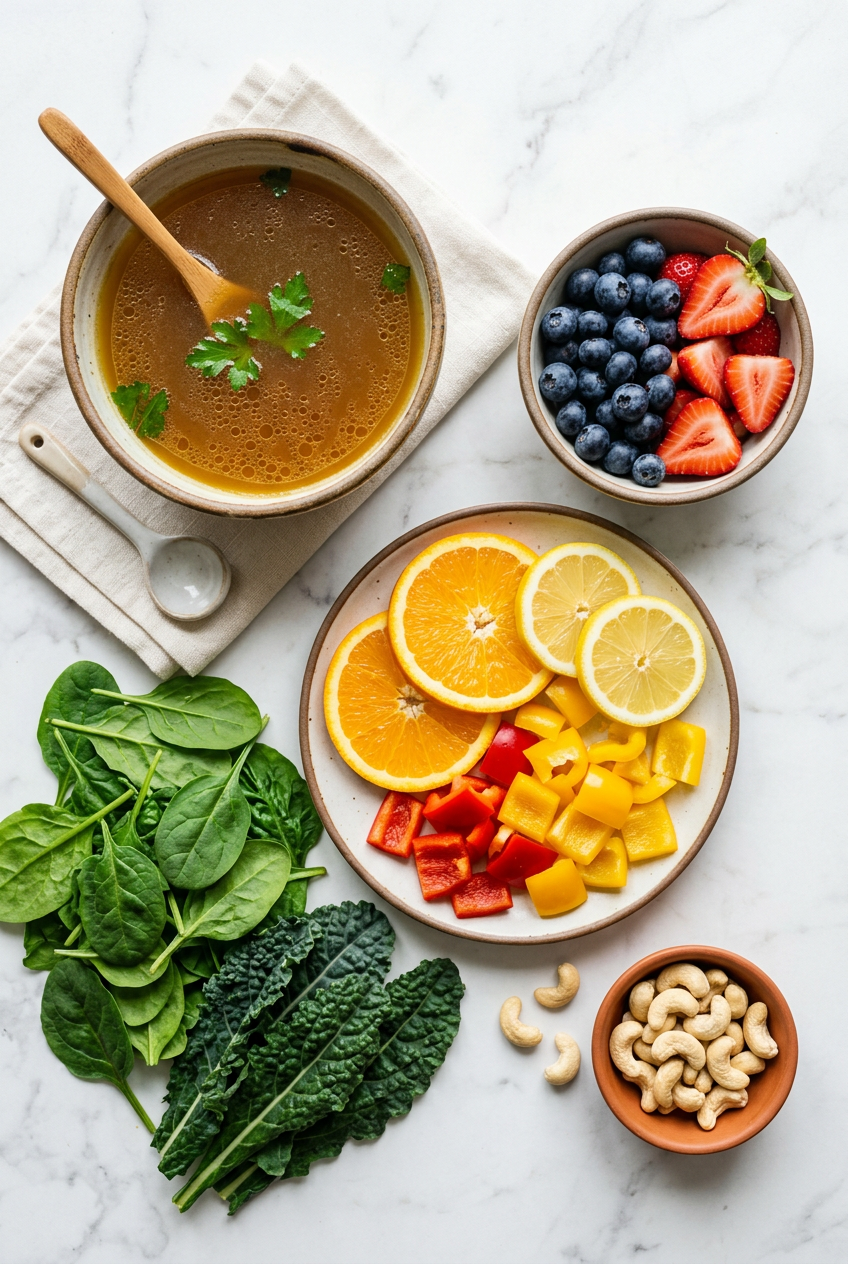
After 40, you start to notice things that moisturiser can't quite fix. Skin loses its bounce. Joints creak a little more. Recovery from workouts takes longer. What's happening beneath the surface? Your collagen production is slowing down — and it started declining years before you noticed.
Collagen is the most abundant protein in your body. It's the structural scaffolding that holds your skin, bones, tendons, ligaments, and gut lining together. From your mid-20s onward, your body produces roughly 1% less collagen each year. By your 40s, the effects are unmistakable.
The good news? You can support your body's collagen production through what you eat. No expensive supplements required — just smart, delicious food choices that give your body the raw materials it needs to rebuild.
Free 7-Day Fat Loss Meal Plan
A printable week of protein-forward meals, shopping list and meal prep guide — designed for women over 40.
🔒 No spam, ever. Unsubscribe anytime.
How Collagen Works (and Why It Declines)
Your body makes collagen by combining amino acids — primarily glycine, proline, and hydroxyproline — with vitamin C, zinc, and copper. Think of it like a construction project: the amino acids are the bricks, and the vitamins and minerals are the tools your workers need to build with them.
After 40, two things happen. First, your body produces fewer "workers" (the enzymes that assemble collagen). Second, external factors — UV exposure, stress, sugar, smoking, poor sleep — actively break down the collagen you already have. The result is a net loss that accelerates with each passing year.
Eating collagen-boosting foods won't reverse the clock, but it gives your body the best possible chance to maintain and rebuild collagen where it matters most.
The Best Collagen-Boosting Foods
1. Bone Broth
Bone broth is arguably the most direct dietary source of collagen. When you simmer animal bones for hours, the collagen in the connective tissue breaks down into gelatin and amino acids — glycine, proline, and glutamine — that your body can absorb and use. A cup of homemade bone broth also provides minerals like calcium, magnesium, and phosphorus.
Sip it warm as a drink, use it as a base for soups and stews, or cook your grains in it for an extra nutrient boost. Aim for a cup a day if you can manage it.
2. Berries
Blueberries, strawberries, raspberries, and blackberries are some of the highest-antioxidant foods on the planet. They're loaded with vitamin C (essential for collagen synthesis) and anthocyanins, which protect existing collagen from free radical damage. Think of berries as your collagen bodyguards — they don't build it directly, but they stop it being destroyed.
A handful a day is plenty. Add them to yoghurt, smoothies, porridge, or just eat them straight from the punnet.
3. Citrus Fruits
Oranges, lemons, limes, and grapefruit are vitamin C powerhouses. Without adequate vitamin C, your body literally cannot produce collagen — it's a non-negotiable cofactor in the synthesis process. Just one medium orange provides more than your entire daily vitamin C requirement.
Squeeze lemon over salads, snack on orange segments, or add citrus juice to dressings and marinades.
4. Leafy Greens
Spinach, kale, silverbeet, and rocket are rich in vitamin C, chlorophyll (which some research suggests may increase procollagen in the skin), and antioxidants that protect against collagen breakdown. They're also packed with vitamin A, which supports skin cell turnover and repair.
Aim for at least two generous handfuls of leafy greens daily. Toss them into smoothies, stir them through soups, or build big salads around them.
5. Bell Peppers (Capsicums)
Red capsicums contain nearly three times as much vitamin C as an orange — gram for gram, they're one of the most vitamin C-dense foods you can eat. They also contain capsanthin, an antioxidant with anti-inflammatory properties that may help protect skin from sun damage.
Slice them raw for snacking, roast them, or add them to stir-fries and salads.
6. Fish and Shellfish
Fish — particularly the skin — is rich in Type I collagen, which is the most abundant type in your body and the one most associated with skin health. The bones and connective tissues in fish also provide collagen peptides. Sardines (eaten whole with bones), salmon, and prawns are excellent choices.
Eating fish with the skin on maximises your collagen intake. Two to three portions per week is a solid goal.
7. Eggs
Egg whites contain proline, one of the key amino acids your body needs to build collagen. The yolks, meanwhile, provide vitamin D and healthy fats that support overall skin health. Together, the whole egg is a collagen-supporting package.
8. Garlic
Garlic is rich in sulphur, a trace mineral that's essential for collagen synthesis. Without enough sulphur, your body can't properly cross-link collagen fibres — which is what gives collagen its strength. Garlic also contains taurine and lipoic acid, which help repair damaged collagen fibres.
Use it generously in cooking — raw or roasted, it works beautifully in dressings, sauces, and roasted vegetables.
9. Nuts and Seeds
Cashews, almonds, sunflower seeds, and pumpkin seeds provide zinc and copper — two minerals that act as cofactors in collagen production. Zinc also helps with wound healing and skin repair, while copper activates an enzyme called lysyl oxidase that's needed for collagen maturation.
A small handful daily covers your needs. Mix them into trail mix, scatter them over salads, or blend them into smoothies.
Foods That Destroy Collagen
What you avoid matters just as much as what you eat. These are the biggest collagen destroyers:
Excess sugar triggers a process called glycation, where sugar molecules attach to collagen fibres and make them stiff and brittle. This accelerates skin ageing and joint stiffness. Minimising added sugar is one of the most impactful things you can do for your collagen.
Alcohol depletes vitamin C, disrupts sleep (when most collagen repair happens), and increases inflammation — all of which accelerate collagen breakdown.
Processed and fried foods generate free radicals that attack collagen fibres. The more processed your diet, the faster your collagen degrades.
Excessive sun exposure without protection breaks down collagen in the skin through UV-generated free radicals. Wear SPF daily — it's the single most effective anti-ageing habit.
Do You Need a Collagen Supplement?
Collagen supplements (usually hydrolysed collagen peptides) have become wildly popular. Some research does support their use for skin elasticity and joint comfort — but they're not magic. If your diet is rich in the foods above, you're already giving your body the building blocks it needs.
If you do choose to supplement, look for hydrolysed collagen peptides (they're easier to absorb) and take them with a source of vitamin C to maximise absorption. But food first, always.
A Simple Daily Collagen-Boosting Eating Pattern
You don't need a complicated meal plan. Here's what a collagen-friendly day might look like:
- Breakfast: Two eggs scrambled with spinach, plus a handful of berries
- Snack: Orange segments with a small handful of cashews
- Lunch: Salmon salad with rocket, capsicum, lemon-olive oil dressing
- Snack: Cup of bone broth
- Dinner: Chicken stir-fry with garlic, leafy greens, and pumpkin seeds
Every meal and snack in that day contains at least one collagen-boosting food. No supplements needed.
The Bottom Line
You can't stop collagen decline entirely — it's a natural part of ageing. But you can slow it down dramatically by eating the right foods, protecting your skin, managing stress, and sleeping well. The foods on this list aren't exotic or expensive. They're simple, whole foods that most of us already have in our kitchens.
Your skin, joints, bones, and gut will thank you. Start today — your collagen will thank you in ten years' time.
Free 7-Day Fat Loss Meal Plan
A printable week of protein-forward meals, shopping list and meal prep guide — designed for women over 40.
🔒 No spam, ever. Unsubscribe anytime.
Want personalised help with this?
My 1:1 online coaching gives you a fully custom training and nutrition plan built around your goals, your body, and your life. 12 weeks, $69/week, with me in your corner the whole way.
Learn About CoachingFree 7-Day Fat Loss Meal Plan
A printable week of protein-forward meals, shopping list, meal prep guide and tracker — designed for women over 40.