How to Build a Stronger Core After 40 (Without a Single Sit-Up)
Let's be honest — when someone says "core workout", most of us picture endless sit-ups and crunches. And if you've been doing them for years without seeing much change (or worse, with a sore neck and achy lower back), you're not alone.
Here's the truth: sit-ups aren't the answer. They target a narrow slice of your core, put strain on your spine, and do very little to build the kind of real-world strength that actually protects your body as you move through your day.
Your core isn't just your abs. It's the entire system of muscles wrapping around your torso — front, back and sides — that stabilises your spine, protects your lower back, and powers nearly every movement you make. And the best way to train it? Exercises that teach your core to resist movement, not create it.
If you're over 40, building a strong, stable core is one of the smartest things you can do for your body. It eases back pain, improves your posture, makes lifting and carrying easier, and protects you from injury. And you can do it all without a single sit-up.
Free 7-Day Beginner Strength Plan
Three simple full-body dumbbell workouts with form cues, warm-ups and rest days built in — designed for women over 40.
🔒 No spam, ever. Unsubscribe anytime.
Why Traditional Ab Work Falls Short
Sit-ups and crunches involve repeatedly flexing your spine — the same position many of us already spend hours in while sitting at a desk or scrolling our phones. Doing hundreds more reps of spinal flexion doesn't fix the problem; it often makes it worse.
They also ignore the deeper core muscles — your transverse abdominis, obliques, and the stabilisers that run along your spine. These are the muscles that actually hold you upright, protect your lower back, and give you that strong, stable midsection.
Real core strength isn't about how many crunches you can do. It's about how well your core can resist movement under load — whether that's resisting rotation, resisting extension, or staying steady while one side of your body moves.
The Smarter Way to Build Core Strength
The exercises below train your core the way it's meant to work: as a stabiliser. They teach your midsection to stay strong and steady while the rest of your body moves, which is exactly what it does in real life — whether you're carrying shopping, picking something up off the floor, or pushing a heavy door open.
1. Dead Bugs
Lie on your back with your arms extended towards the ceiling and your knees bent at 90 degrees, shins parallel to the floor. Press your lower back gently into the mat. Slowly extend one leg out straight while lowering the opposite arm overhead. Keep your lower back glued to the floor the entire time. Return to the start and repeat on the other side.
This teaches your core to stay stable while your limbs move — one of the most important skills for protecting your lower back.
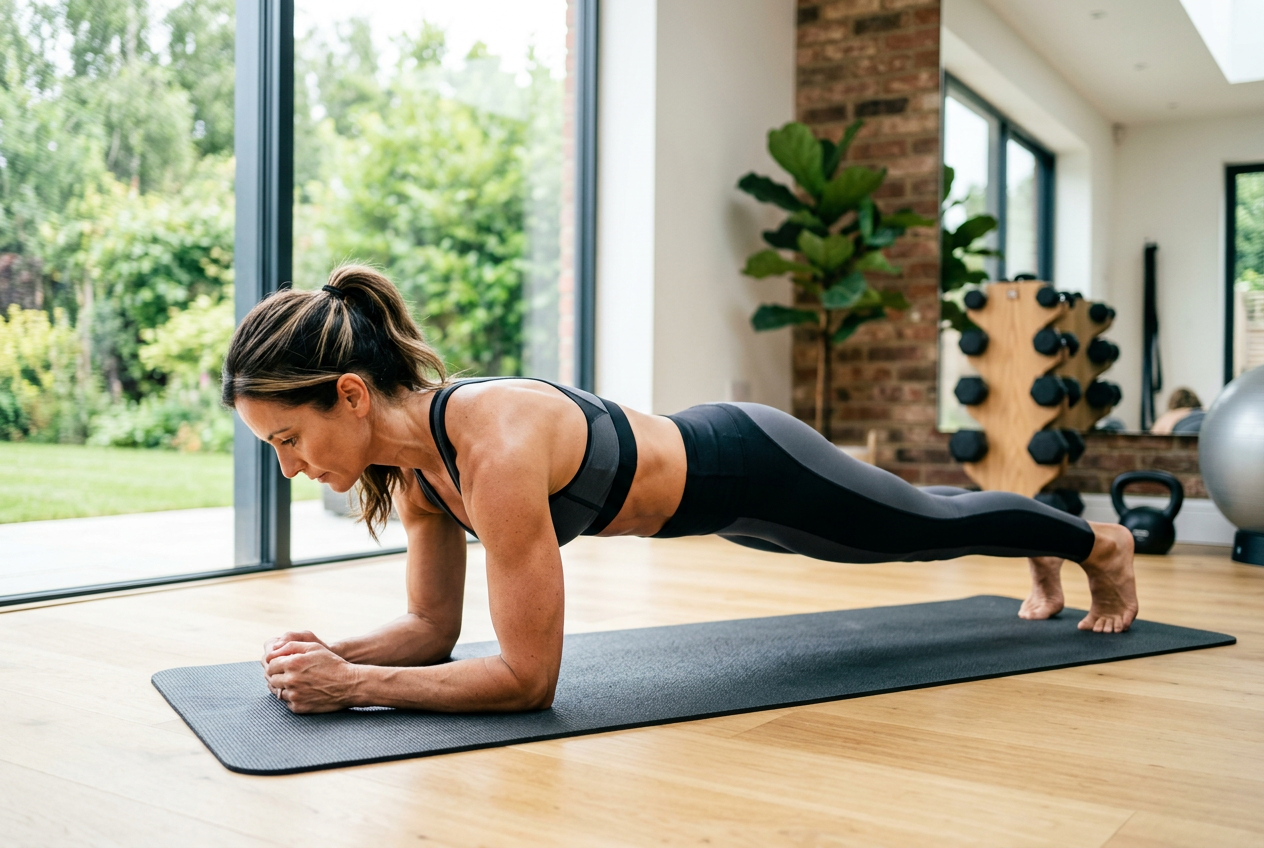
2. Planks (Done Properly)
Start on your forearms and toes, body in a straight line from head to heels. Your hips shouldn't sag or pike up. Squeeze your glutes, brace your core as if someone's about to poke your belly, and breathe steadily. Hold for 20–40 seconds with perfect form rather than 2 minutes with your hips drooping.
Planks teach your core to resist extension — the same stability you need when you're standing or walking upright.
3. Bird Dogs
Start on all fours, wrists under shoulders and knees under hips. Keep your back flat and your core braced. Extend one arm forward and the opposite leg back, forming a straight line. Hold for a beat, then return to the start. Repeat on the other side.
This builds anti-rotation strength and coordination — brilliant for balance and lower back health.
4. Side Planks
Lie on your side, propped up on one forearm with your feet stacked. Lift your hips so your body forms a straight line. Hold steady for 20–30 seconds, then switch sides.
Side planks target your obliques — the muscles that stabilise your torso when you twist, bend, or carry something on one side.
5. Pallof Press (or Resistance Band Alternative)
Stand side-on to a resistance band anchored at chest height. Hold the band with both hands at your sternum, step away to create tension, then press the band straight out in front of you. Hold for a beat, resisting the pull back towards the anchor. Return slowly and repeat.
This is anti-rotation gold. It trains your core to resist twisting forces — exactly what it does when you're carrying a bag on one shoulder or reaching across your body.
6. Bear Holds
Start on all fours, then lift your knees a few centimetres off the ground. Hold this position, keeping your back flat and your core tight. Your shoulders, hips and knees should stay still — no rocking. Hold for 20–30 seconds.
Bear holds are deceptively tough. They train total-body tension and teach your core to stay rock-solid under fatigue.
How to Programme These Exercises
You don't need an hour-long core session. Ten minutes, two or three times a week, is plenty if you're doing the right exercises with good form.
Pick three or four exercises from the list above and do 2–3 sets of each. For holds (planks, side planks, bear holds), aim for 20–40 seconds. For reps (dead bugs, bird dogs, Pallof presses), aim for 8–12 per side.
Focus on quality over quantity. If your form starts to break down — your hips sag, your lower back arches, or you stop breathing — rest and reset. Sloppy reps teach your body bad patterns and rob you of the benefits.
Why This Matters More After 40
As we age, our core stability naturally weakens unless we work to maintain it. That's one reason lower back pain becomes more common in midlife — the muscles that should be supporting your spine aren't doing their job.
A strong core protects your lower back, improves your posture, and makes everyday movements easier and safer. It's also the foundation for every other strength exercise you do — your squat, your deadlift, your press — all depend on a solid, stable midsection.
And the best part? You don't need fancy equipment or a gym membership. A yoga mat and a resistance band are more than enough.
The Bottom Line
Sit-ups aren't the villain, but they're not the hero either. If you want a core that's truly strong — one that protects your back, improves your posture, and makes you more resilient in everyday life — train it the way it's designed to work: as a stabiliser, not a flexor.
Start with the exercises above, keep your form tight, and be consistent. Your lower back (and your future self) will thank you.
💛
Free 7-Day Beginner Strength Plan
Three simple full-body dumbbell workouts with form cues, warm-ups and rest days built in — designed for women over 40.
🔒 No spam, ever. Unsubscribe anytime.
Want personalised help with this?
My 1:1 online coaching gives you a fully custom training and nutrition plan built around your goals, your body, and your life. 12 weeks, $69/week, with me in your corner the whole way.
Learn About CoachingFree 7-Day Fat Loss Meal Plan
A printable week of protein-forward meals, shopping list, meal prep guide and tracker — designed for women over 40.