Functional Fitness After 40: Train for Real Life, Not Just the Gym
Let me ask you something. When was the last time you needed to do a bicep curl in real life? Compare that to the last time you had to carry heavy shopping bags from the car, haul a suitcase off a carousel, get up off the floor after playing with a grandchild, or lug a bag of potting mix across the garden. Real life does not test us with neat, isolated gym exercises. It tests us with awkward, heavy, unpredictable movement — and that is exactly what functional fitness trains you for.
Free 7-Day Beginner Strength Plan
Three simple full-body dumbbell workouts with form cues, warm-ups and rest days built in — designed for women over 40.
🔒 No spam, ever. Unsubscribe anytime.
What Functional Fitness Actually Means
Functional fitness is simply exercise that makes everyday life easier. Instead of training muscles in isolation, it trains movements — pushing, pulling, carrying, squatting, hinging, twisting and balancing. These are the patterns your body uses hundreds of times a day without you even thinking about it. When they are strong, everything from carrying a toddler to rearranging furniture feels effortless. When they are weak, you start to notice aches, hesitations, and that creeping feeling of losing confidence in what your body can do.
After 40, functional fitness is not a nice-to-have — it is essential. Muscle loss accelerates, balance naturally declines, and the gap between what your body can do and what life asks of it starts to widen. Functional training closes that gap beautifully.
Why It Matters More After 40
There are a few specific reasons functional fitness becomes more important as we age, and understanding them will change how you think about your training.
Fall prevention. Falls are the leading cause of injury in older adults, and the risk begins building in your forties. Functional exercises that challenge your balance, coordination and lower body strength are one of the most effective ways to reduce that risk dramatically.
Joint protection. Functional movements train multiple joints and muscles together, exactly the way your body is designed to work. This distributes load more evenly and reduces the strain that isolated exercises can sometimes place on a single joint.
Independence. Being able to lift, carry, reach, bend and get yourself off the floor without help is not just fitness — it is freedom. Functional training protects that independence for decades to come.
Confidence. There is something deeply empowering about knowing your body can handle whatever the day throws at it. That quiet confidence changes how you move through the world.
Seven Functional Exercises Every Woman Over 40 Should Know
None of these require fancy equipment, and all of them translate directly into real-life strength.
1. The Goblet Squat
Hold a dumbbell or kettlebell at your chest and squat down as if sitting into a chair. This trains the exact movement you use to sit down, stand up, pick things off the floor and get in and out of the car. Strong squats mean strong, capable legs for life.
2. The Farmer's Carry
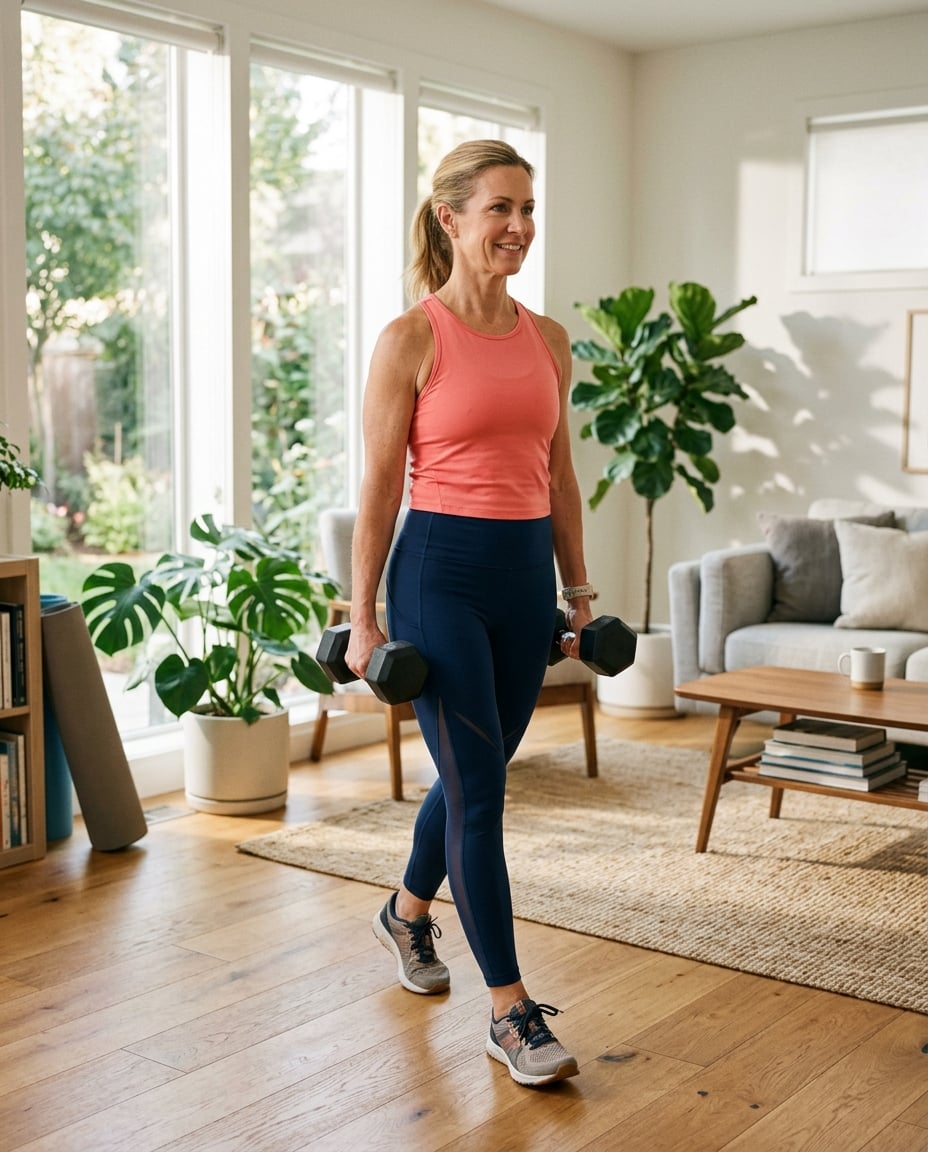
Pick up a heavy dumbbell or kettlebell in each hand and walk. That is it. This deceptively simple exercise builds grip strength, core stability, shoulder endurance and the ability to carry heavy bags, suitcases and children without your back complaining.
3. The Step-Up
Step up onto a sturdy box or bench, drive through your front heel, and stand tall. This is the staircase exercise — and strong, confident stair climbing is one of the first things women notice improving when they train functionally.
4. The Deadlift
Hinge at your hips, grip a weight and stand up with it. This teaches you to lift heavy things from the floor safely — the laundry basket, a bag of dog food, a potted plant. Proper hip hinge technique is quite literally a back-saver.
5. The Push-Up (Modified If Needed)
Pushing yourself up from the floor, or pushing something heavy away from you, is a fundamental life skill. Start on an incline if the floor is too challenging and work your way down over time. There is zero shame in meeting yourself where you are.
6. The Single-Leg Balance
Stand on one leg for 30 seconds per side. Too easy? Close your eyes. Still too easy? Stand on a cushion. Balance is a use-it-or-lose-it skill, and spending just a few minutes on it each week pays extraordinary dividends as you get older.
7. The Turkish Get-Up (Simplified)
Start lying on your back and stand all the way up, then reverse the process. This is the ultimate functional movement — it tests and trains every link in the chain. Being able to get yourself off the floor confidently is one of the most important physical abilities you can maintain.
How to Weave Functional Training Into Your Week
You do not need a separate "functional fitness day." The beauty of these exercises is that they slot into any existing routine. Replace a leg press with goblet squats. Swap a machine row for a farmer's carry. Add single-leg balance work to the end of any session. Or dedicate one of your strength days entirely to functional movements — the seven exercises above make a brilliant full-body workout on their own.
Train for Your Life, Not Just the Mirror
There is nothing wrong with wanting to look strong. But the real gift of training after 40 is feeling strong — in your kitchen, in your garden, on your holiday, with your family, in every ordinary moment where your body is quietly doing extraordinary things. Functional fitness bridges the gap between the gym and real life, and once you start training this way, you will wonder why anyone trains any other way. Your body was built for this. Let it show you what it can do.
Free 7-Day Beginner Strength Plan
Three simple full-body dumbbell workouts with form cues, warm-ups and rest days built in — designed for women over 40.
🔒 No spam, ever. Unsubscribe anytime.
Want personalised help with this?
My 1:1 online coaching gives you a fully custom training and nutrition plan built around your goals, your body, and your life. 12 weeks, $69/week, with me in your corner the whole way.
Learn About CoachingFree 7-Day Fat Loss Meal Plan
A printable week of protein-forward meals, shopping list, meal prep guide and tracker — designed for women over 40.