Glute Exercises for Women Over 40: Build Strength Where It Matters Most
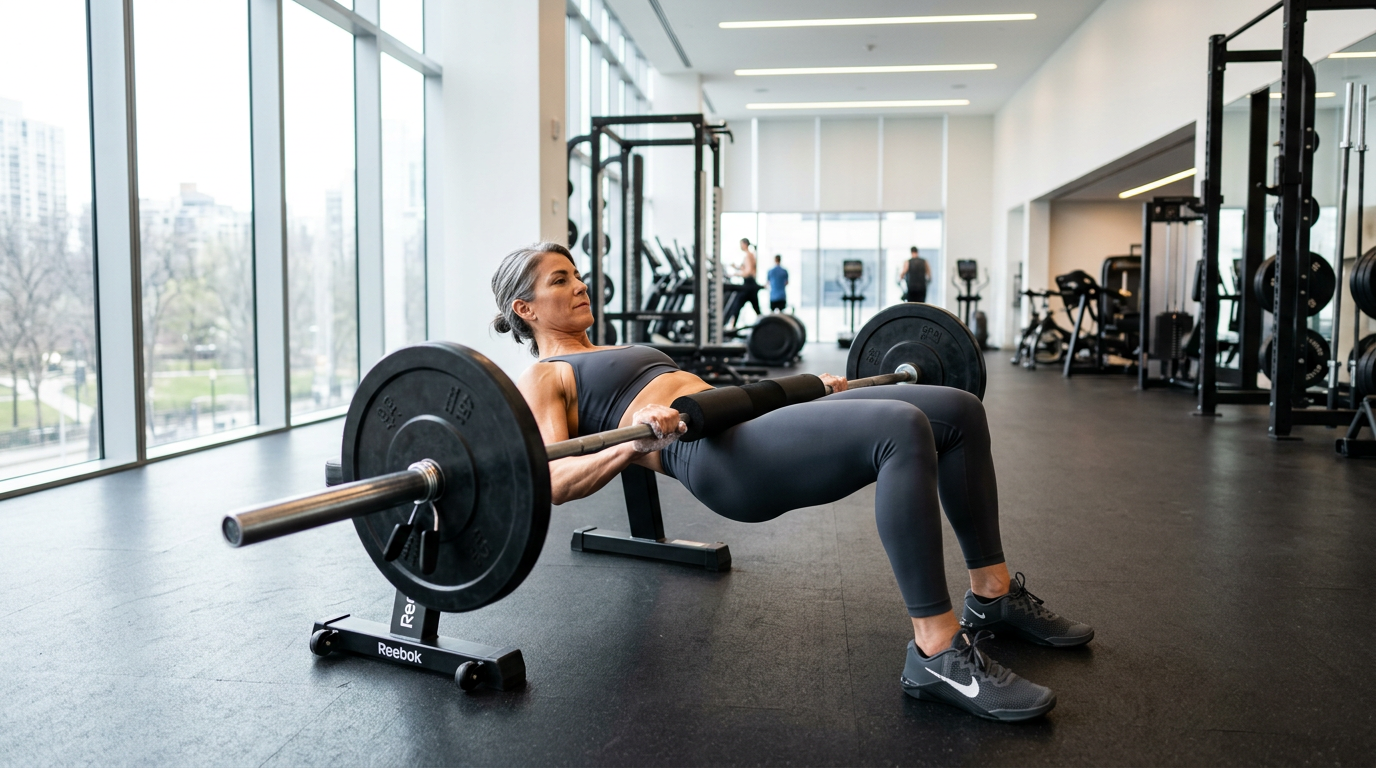
If there is one muscle group that deserves more attention after 40, it is your glutes. And no, this is not about aesthetics (although strong glutes do look fantastic). Your glutes are the powerhouse of your entire body — they stabilise your pelvis, protect your lower back, support your knees, power your walking stride and help you get up from a chair without groaning.
The problem? For most women over 40, the glutes are weak and under-active. Years of sitting, combined with hormonal changes that affect muscle mass, mean these big, important muscles have essentially gone to sleep. Your body compensates by overloading the lower back, hips and knees — which is why so many women experience pain in those areas.
The good news: your glutes respond incredibly well to targeted training, at any age. With the right exercises, done consistently, you can rebuild glute strength, reduce pain elsewhere in the body and move through your day with more power and confidence.
Free 7-Day Beginner Strength Plan
Three simple full-body dumbbell workouts with form cues, warm-ups and rest days built in — designed for women over 40.
🔒 No spam, ever. Unsubscribe anytime.
Why Your Glutes Matter So Much After 40
Your gluteus maximus is the largest muscle in your body, and it is supported by the gluteus medius and minimus on the side of your hip. Together, these three muscles are responsible for:
- Hip extension — standing up from sitting, climbing stairs, walking uphill
- Hip abduction — stepping sideways, stabilising your pelvis when you stand on one leg
- Pelvic stability — keeping your pelvis level when you walk, which protects your lower back and knees
- Shock absorption — cushioning the impact of every step you take
After 40, we lose roughly 3–5% of muscle mass per decade if we are not actively training. The glutes, being a large muscle group that is under-used in sedentary lifestyles, tend to weaken faster than smaller muscles. This is one reason why lower back pain, hip pain and knee problems become so much more common in midlife.
Training your glutes is not vanity — it is injury prevention, pain reduction and functional independence. It is the difference between needing help getting off the floor at 70 and doing it effortlessly.
6 Glute Exercises for Women Over 40
1. Glute Bridge
Lie on your back with knees bent, feet flat on the floor, hip-width apart. Press through your heels and lift your hips towards the ceiling, squeezing your glutes hard at the top. Hold for 2–3 seconds, then lower slowly. Do 12–15 reps for 3 sets.
Why it works: The glute bridge is the foundation of glute training. It isolates the glutes without loading the spine, making it safe for anyone with lower back issues. Focus on the squeeze at the top — if you cannot feel it in your glutes, push through your heels harder and think about driving your hips up, not your back.
2. Romanian Deadlift (Dumbbell)
Stand with feet hip-width apart, holding a dumbbell in each hand in front of your thighs. With a slight bend in your knees, hinge forward at the hips, pushing your bottom backwards as you lower the weights along your shins. Go as far as your hamstring flexibility allows (roughly mid-shin), then drive your hips forward to stand tall, squeezing your glutes at the top. Do 10–12 reps for 3 sets.
Why it works: The Romanian deadlift is one of the best exercises for building the glutes and hamstrings together. It trains the hip hinge pattern — a movement you use every day when you bend to pick something up. Starting light is key; even 3–5kg dumbbells are enough to feel the burn when your form is right.
3. Step-Up (Medium Height)
Stand in front of a sturdy step, bench or the second stair. Step up with your right foot, pressing through the heel, and drive your left knee up to hip height at the top. Step back down with control. Do 10 reps on each side for 3 sets.
Why it works: Step-ups are a functional, single-leg exercise that targets the glutes and quads while challenging your balance. The higher the step, the more glute activation — but start at a comfortable height and progress gradually.
4. Lateral Band Walk
Place a resistance band around both legs, just above your knees (or around your ankles for more challenge). Stand in a quarter squat position with your feet hip-width apart. Take 10 small steps to the right, keeping tension in the band the whole time, then 10 steps back to the left. Do 3 sets.
Why it works: This targets the gluteus medius — the side glute muscle that most women neglect entirely. A strong glute medius prevents your knees from caving inward during squats, stairs and walking. It is also one of the key muscles for pelvic stability and balance.
5. Single-Leg Glute Bridge
Set up as for a regular glute bridge, but extend one leg straight out so only one foot is on the floor. Press through the working heel and lift your hips, keeping your pelvis level (do not let it drop to one side). Do 8–10 reps on each side for 3 sets.
Why it works: The single-leg version dramatically increases the demand on each glute individually. It also exposes any side-to-side imbalances — most people find one side significantly weaker. Evening out that imbalance reduces injury risk and improves walking mechanics.
6. Sumo Squat
Stand with feet wider than shoulder-width, toes pointed out at roughly 45 degrees. Hold a dumbbell or kettlebell at chest height (or bodyweight only). Lower into a squat, keeping your chest tall and knees tracking over your toes. Press through your heels to stand, squeezing your glutes at the top. Do 12 reps for 3 sets.
Why it works: The wide stance and external rotation of the sumo squat shifts emphasis onto the glutes and inner thighs compared to a regular squat. It is also gentler on the knees for many women, making it a great option if narrow squats feel uncomfortable.
How to Structure Your Glute Training
You do not need to do all six exercises every session. Here is a simple way to structure it:
- 2–3 sessions per week, with at least one rest day between
- Pick 3–4 exercises per session and rotate
- Start with bodyweight and add resistance (dumbbells, bands) once the movement feels comfortable
- Focus on the squeeze. If you cannot feel your glutes working, slow down, reduce the weight and concentrate on the mind-muscle connection
A sample week might look like this:
- Monday: Glute bridge, Romanian deadlift, lateral band walk
- Wednesday: Step-up, single-leg glute bridge, sumo squat
- Friday: Glute bridge (heavier), Romanian deadlift, lateral band walk
Each session takes about 20–25 minutes. Add a 2-minute warm-up walk and a quick stretch at the end and you are done.
Common Mistakes to Avoid
- Using your lower back instead of your glutes. If your back aches after glute bridges or deadlifts, you are likely hyperextending at the top. Think about tucking your tailbone slightly and squeezing your glutes — not arching your back.
- Going too heavy too soon. Your glutes might be strong enough to lift heavy, but your tendons and connective tissue need time to adapt. Start lighter than you think you need and increase gradually.
- Skipping the side glute. Exercises like lateral band walks are not as exciting as heavy deadlifts, but the gluteus medius is crucial for knee health, hip stability and balance. Do not skip it.
- Only training glutes once a week. Because the glutes are a large, resilient muscle group, they can handle (and benefit from) 2–3 sessions per week. More frequency equals faster results.
The Bottom Line
Your glutes are not just about how you look in jeans (although that is a lovely bonus). They are the foundation of how you move, how you stand, how you protect your back and how you stay active and independent as you age. Weak glutes are behind so many of the aches, pains and movement limitations women experience after 40 — and the fix is surprisingly simple.
Pick three exercises from this list, do them two to three times a week, and within a month you will feel the difference — stronger on stairs, less back pain, better balance, more confidence in every movement. Your glutes were designed to be powerful. It is time to wake them up. 💛
Free 7-Day Beginner Strength Plan
Three simple full-body dumbbell workouts with form cues, warm-ups and rest days built in — designed for women over 40.
🔒 No spam, ever. Unsubscribe anytime.
Want personalised help with this?
My 1:1 online coaching gives you a fully custom training and nutrition plan built around your goals, your body, and your life. 12 weeks, $69/week, with me in your corner the whole way.
Learn About CoachingFree 7-Day Fat Loss Meal Plan
A printable week of protein-forward meals, shopping list, meal prep guide and tracker — designed for women over 40.