Joint Health After 40: How to Protect Your Knees, Shoulders and Hips While Getting Stronger
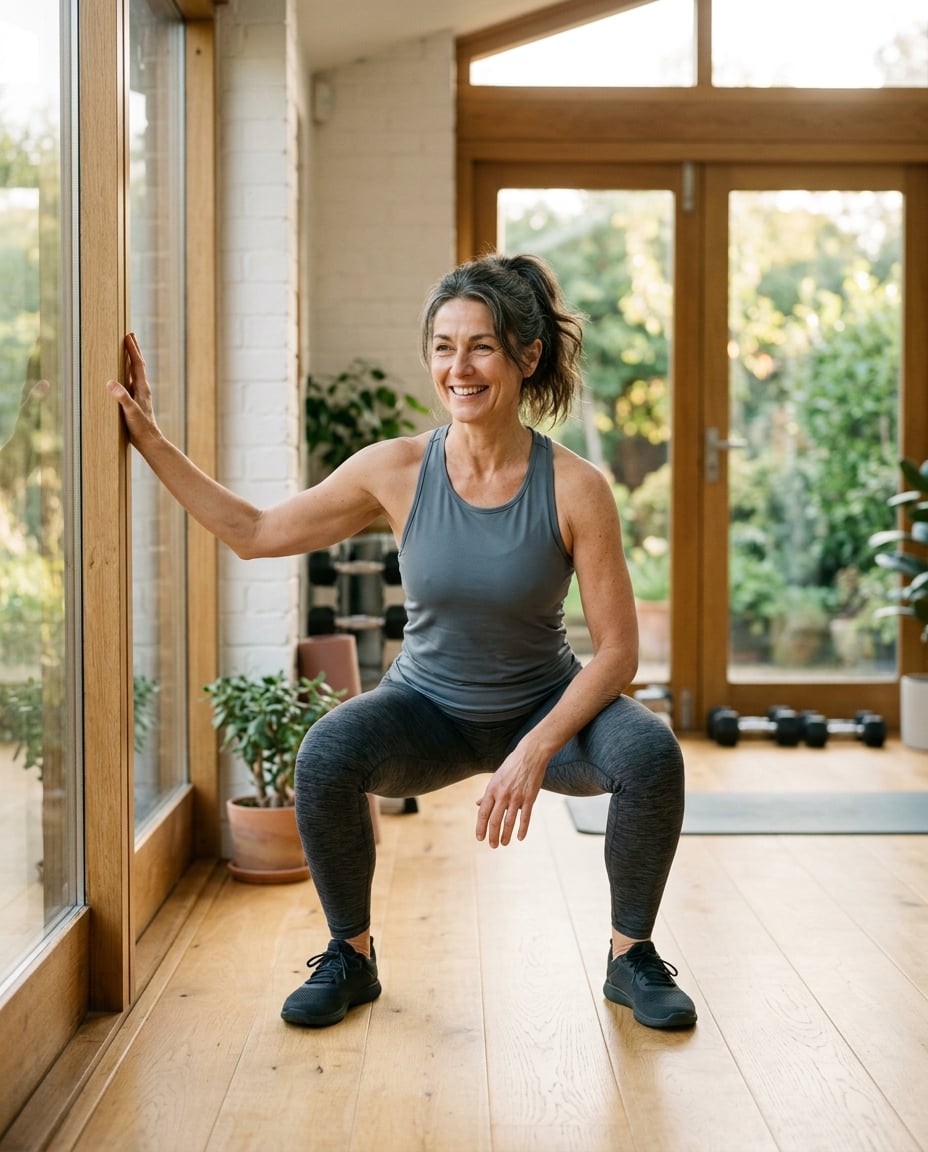
If there is one thing that stops women over 40 from exercising, it is not motivation, time or knowledge. It is their joints. The knees that ache going downstairs. The shoulder that catches when you reach overhead. The hips that feel stiff after sitting for an hour. Joint discomfort is incredibly common in midlife — and incredibly misunderstood.
Most women assume sore joints mean they should exercise less. The truth is almost always the opposite. The right kind of movement is one of the most powerful things you can do for your joints after 40, and avoiding it is one of the most damaging. Let me explain why, and show you exactly how to train in a way that protects, strengthens and even heals.
Free Protein Cheat Sheet
Your daily protein target, the protein in 40+ everyday foods, and 25 easy high-protein snacks — all on one printable page.
🔒 No spam, ever. Unsubscribe anytime.
What Happens to Your Joints After 40
Joints are not just bones meeting bones. They are complex structures held together by ligaments, cushioned by cartilage, lubricated by synovial fluid, and stabilised by the muscles and tendons around them. After 40, several things shift:
- Cartilage thins. The cushioning between your bones gradually wears, especially if it has not been loaded (used) regularly. Cartilage has no blood supply — it gets its nutrients from movement, quite literally being squeezed and released like a sponge.
- Synovial fluid decreases. The lubricant inside your joints reduces with age and inactivity, which is why joints feel stiff after sitting but loosen up once you start moving.
- Muscles weaken. When the muscles around a joint lose strength, the joint itself takes more of the load. Weak quads, for instance, put far more stress on the knee.
- Hormonal changes. Declining oestrogen during perimenopause and menopause increases inflammation and can make joints ache even when there is no structural damage. Many women experience sudden joint pain in their late forties and assume something is wrong — often it is hormonal.
Why Movement Helps (Not Hurts)
It sounds counterintuitive, but research consistently shows that appropriate exercise reduces joint pain, improves function, and slows the progression of conditions like osteoarthritis. Here is why:
- It feeds cartilage. Weight-bearing movement pumps nutrients into cartilage that would otherwise starve.
- It builds shock absorbers. Stronger muscles around a joint absorb impact before it reaches the bone and cartilage.
- It reduces inflammation. Regular moderate exercise lowers the systemic inflammation that drives joint pain.
- It improves range of motion. Moving a joint through its full range keeps it mobile and prevents stiffness from becoming permanent.
Seven Joint-Friendly Training Strategies
1. Warm Up Properly — Every Time
Cold joints are stiff joints. Spend five minutes warming up with gentle movement — marching on the spot, leg swings, arm circles, bodyweight squats — before any workout. This primes the synovial fluid and increases blood flow to the muscles that protect your joints. Skipping the warm-up is one of the most common causes of joint flare-ups.
2. Strengthen the Muscles Around Problem Joints
Sore knees? Strengthen your quads, hamstrings and glutes. Achy shoulders? Build your rotator cuff and upper back. The muscles around a joint act as scaffolding — the stronger they are, the less stress the joint itself endures. This is the single most effective long-term strategy for joint health.
3. Choose Low-Impact Over High-Impact
You do not need to jump, sprint or do burpees to get results. Walking, cycling, swimming, resistance bands, and bodyweight or dumbbell strength training all deliver excellent outcomes with a fraction of the joint stress. High-impact work is not bad, but if your joints are already talking to you, there is no reason to shout back.
4. Control the Eccentric (Lowering) Phase
Slow, controlled lowering — taking three seconds to lower into a squat, for instance — builds strength through the full range and is much kinder to joints than dropping quickly. It also builds more muscle than the lifting phase, so you get better results and less pain. Win-win.
5. Move Through Full Range of Motion
Partial reps feel easier but leave parts of the joint underloaded and underlubricated. Go as deep as your pain-free range allows, and work gradually to increase it. A properly loaded full-range squat is one of the best things you can do for your knees — despite what you may have been told.
6. Add Daily Mobility Work
Spend five to ten minutes daily on gentle mobility — hip circles, thoracic rotations, ankle circles, shoulder pass-throughs. Think of it as oiling the hinges. You do not need a full yoga class; a few targeted movements while the kettle boils is enough to keep stiffness at bay.
7. Do Not Train Through Sharp Pain
There is a difference between the dull ache of muscles working hard and the sharp, localised pain of a joint in distress. Muscle ache during a set is normal. Sharp pain in a joint is a signal to stop, modify or choose a different exercise. Learn to tell the difference and respect it.
Foods That Support Your Joints
What you eat matters too. Focus on anti-inflammatory foods that support cartilage and reduce swelling:
- Oily fish (salmon, sardines, mackerel) — rich in omega-3 fatty acids that reduce joint inflammation.
- Colourful vegetables and berries — packed with antioxidants that protect cartilage from damage.
- Bone broth — contains collagen, glucosamine and chondroitin, the building blocks of joint tissue.
- Turmeric and ginger — natural anti-inflammatories with good evidence behind them.
- Adequate protein — essential for rebuilding the muscles that protect your joints.
Your Joints Are Not the Enemy
Joint discomfort after 40 does not mean your body is breaking down. It means it is asking for smarter movement, stronger muscles and a little more care. The women who thrive in midlife are not the ones who stop moving because something hurts — they are the ones who learn to move differently, build strength where it matters, and show up consistently.
Your joints carried you this far. Now it is your turn to carry them — with warmth, strength and the right kind of training. That is what your strong era looks like.
Free Protein Cheat Sheet
Your daily protein target, the protein in 40+ everyday foods, and 25 easy high-protein snacks — all on one printable page.
🔒 No spam, ever. Unsubscribe anytime.
Want personalised help with this?
My 1:1 online coaching gives you a fully custom training and nutrition plan built around your goals, your body, and your life. 12 weeks, $69/week, with me in your corner the whole way.
Learn About CoachingFree 7-Day Fat Loss Meal Plan
A printable week of protein-forward meals, shopping list, meal prep guide and tracker — designed for women over 40.