Lower Back Pain After 40: Gentle Fixes That Actually Work
If you have ever winced getting out of the car, braced yourself before picking up a laundry basket, or felt a deep ache settle into your lower back after a day at your desk, you are far from alone. Lower back pain is one of the most common complaints women bring to me after 40 — and one of the most misunderstood. The good news I want to lead with is this: for the vast majority of women, a stiff, sore back is not a sign that your body is falling apart. It is a sign that something needs attention. And attention, thankfully, is something we can give.
Free 7-Day Beginner Strength Plan
Three simple full-body dumbbell workouts with form cues, warm-ups and rest days built in — designed for women over 40.
🔒 No spam, ever. Unsubscribe anytime.
Why Backs Get Grumpy After 40
Several things quietly shift as we move through our forties and fifties, and they gang up on the lower back. We tend to sit more — at desks, in cars, on sofas — which shortens the muscles at the front of the hips and switches off the glutes that are meant to support the spine. The deep core muscles that stabilise us weaken if they are not challenged. Falling oestrogen through perimenopause affects the discs, ligaments and connective tissue that keep the spine supple. And years of moving in the same few patterns leave certain muscles tight and others sleepy.
None of this means damage. In fact, the modern understanding of back pain has moved a long way from the old "slipped disc, be careful forever" narrative. Backs are strong, resilient structures designed to bend, lift and twist. The problem is usually not that your back is too fragile — it is that it has become deconditioned and is asking to be used more, not less.
The Biggest Myth: Rest Fixes It
When your back hurts, every instinct tells you to lie down and wait it out. And for the first day or two of an acute flare, gentle rest and movement is sensible. But prolonged rest is one of the worst things you can do for a grumpy back. Muscles weaken quickly, stiffness sets in, and the fear of moving often lingers long after the pain has gone. The research is remarkably consistent: gentle, progressive movement helps backs recover faster and stay healthier than rest ever could.
This is genuinely liberating news. It means you are not stuck waiting for your back to heal on its own. You have an active role to play — and the things that help are gentle, doable, and require no equipment.
Five Gentle Movements That Support Your Back
These are the foundations I return to again and again with women who want a stronger, calmer back. Start slowly, move within a comfortable range, and stop if anything sends a sharp pain down your leg (that is a signal to check in with a professional).
1. The Bird-Dog
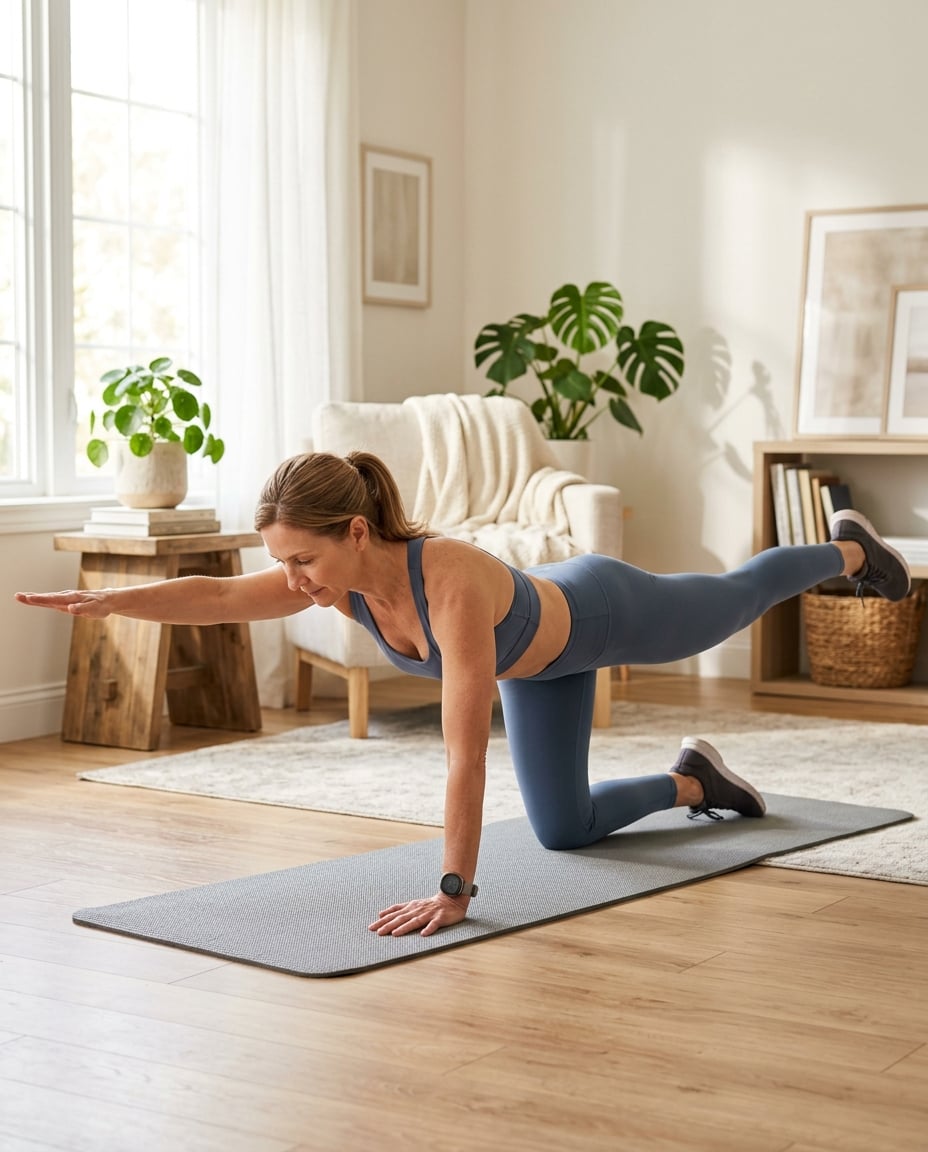
On your hands and knees, extend one arm forwards and the opposite leg behind you, keeping your hips level and your core gently engaged. Hold for a breath or two, then switch sides. This teaches your deep core and back muscles to work together to keep the spine stable — exactly the skill your back needs for everyday life.
2. The Glute Bridge
Lying on your back with knees bent, press through your heels and lift your hips towards the ceiling, squeezing your glutes at the top. Strong glutes are a back's best friend; when they are asleep, the lower back tries to do their job and gets overloaded.
3. Cat-Cow
On all fours, gently alternate between arching your back towards the ceiling and letting your belly sink towards the floor. This soothing, rhythmic movement restores mobility to a stiff spine and feels wonderful first thing in the morning.
4. The Dead Bug
Lying on your back, lift your arms towards the ceiling and your knees to a tabletop position. Slowly lower one arm overhead and the opposite leg towards the floor, keeping your lower back gently pressed down. This builds the deep core control that protects your spine under load.
5. Hip Flexor Stretch
From a kneeling lunge position, gently shift your weight forwards until you feel a stretch across the front of the hip on the kneeling side. Tight hip flexors from all that sitting pull on the lower back; releasing them brings surprising relief.
Strengthen, Do Not Just Stretch
Many women assume that a sore back needs more stretching. Stretching feels good in the moment, but it rarely solves the problem on its own. A back that aches is usually a back that needs to be stronger — better able to support you through the day. That is why gentle strength work, particularly for your core, glutes and the muscles running along your spine, is the real long-term answer. Think of stretching as the relief and strengthening as the cure.
The Everyday Habits That Matter Most
What you do in the other twenty-three hours of the day matters just as much as any exercise. Break up long stretches of sitting — stand and move every 30 to 45 minutes, even if it is just a lap of the kitchen. When you lift something, hinge at the hips and let your legs do the work rather than rounding your back. Keep walking; a daily walk is one of the most underrated back treatments there is. And pay attention to how you sleep — a pillow between or under the knees can take real pressure off the lower back overnight.
When to Check With a Professional
Most everyday back pain settles with gentle movement and a little patience. But please see your GP or a physiotherapist if you have pain that shoots down your leg, numbness or tingling, any loss of bladder or bowel control, pain following a fall, or discomfort that is steadily worsening rather than easing. These are less common, but they deserve proper assessment. Seeking help is not a failure — it is you taking your body seriously.
Your Back Wants to Be Used
If I could leave you with one thought, it is this: your back is not delicate. It is a strong, adaptable part of you that thrives on movement and gentle challenge. The women I work with are so often braced for a future of managing pain, and are amazed to find that a few minutes of the right movements most days can change everything. Start small. Be consistent. Move with confidence rather than fear. Your back has been waiting for exactly this.
Free 7-Day Beginner Strength Plan
Three simple full-body dumbbell workouts with form cues, warm-ups and rest days built in — designed for women over 40.
🔒 No spam, ever. Unsubscribe anytime.
Want personalised help with this?
My 1:1 online coaching gives you a fully custom training and nutrition plan built around your goals, your body, and your life. 12 weeks, $69/week, with me in your corner the whole way.
Learn About CoachingFree 7-Day Fat Loss Meal Plan
A printable week of protein-forward meals, shopping list, meal prep guide and tracker — designed for women over 40.