
Magnesium for Women Over 40: The Quiet Mineral That Changes Everything
If I could sneak one extra nutrient into every woman-over-40's day, it might just be magnesium. It is one of those quiet, unglamorous minerals that almost never gets the spotlight — and yet it is involved in more than three hundred processes in your body, from your sleep to your muscles to your mood. The trouble is, a huge number of women are running low on it without ever realising, and the symptoms are so easily blamed on "just getting older".
Let me change that. Once you understand what magnesium does and how to get more of it, you have a simple, natural tool that can genuinely transform how you feel. 💛
Free 7-Day Fat Loss Meal Plan
A printable week of protein-forward meals, shopping list and meal prep guide — designed for women over 40.
🔒 No spam, ever. Unsubscribe anytime.
Why magnesium matters more after 40
Magnesium is a true multitasker. It helps your muscles relax, your nervous system calm down, your blood sugar stay steady and your bones stay strong. But here is the catch: as we move through our forties and beyond, several things gang up to leave us short. We tend to absorb minerals less efficiently, we often eat a little less overall, stress depletes our magnesium stores faster, and modern farming has left many foods lower in it than they once were.
On top of that, the hormonal shifts of perimenopause can make the symptoms of low magnesium — poor sleep, cramps, anxiety, fatigue — feel even more pronounced. It is a perfect storm, and it is why paying attention to this one mineral can make such a noticeable difference in midlife.
Five reasons women over 40 need magnesium
1. It helps you sleep better
Magnesium calms the nervous system and supports the production of melatonin, the hormone that governs sleep. If you are struggling to drop off or waking in the night — so common in perimenopause — topping up your magnesium can help you fall asleep more easily and sleep more deeply. Many women notice this benefit first.
2. It eases muscle cramps and tension
Those night-time leg cramps, the tight shoulders, the eye twitches — low magnesium is a frequent culprit. Because magnesium helps muscles relax after they contract, getting enough can ease cramping, tension and general muscular achiness that so often creeps in after 40.
3. It calms stress and anxiety
Magnesium plays a key role in regulating your stress response and your mood. When you are low, you can feel more anxious, wired and on-edge — and stress in turn burns through your magnesium faster, creating a vicious cycle. Restoring your levels helps you feel calmer and more resilient.
4. It supports strong bones
We hear plenty about calcium for bone health, but magnesium is just as essential — it helps your body absorb and use calcium properly and contributes to bone structure itself. With bone density becoming a real priority after 40, magnesium is a quiet but crucial ally.
5. It boosts energy and eases fatigue
Magnesium is needed to turn the food you eat into usable energy. If you are running low, you may feel tired and sluggish no matter how much you rest. Getting enough helps your body produce energy efficiently, so you feel more like yourself again.
The best food sources of magnesium
Food first is always my philosophy, and happily, magnesium-rich foods are delicious and easy to build into your day. Aim to include a few of these regularly:
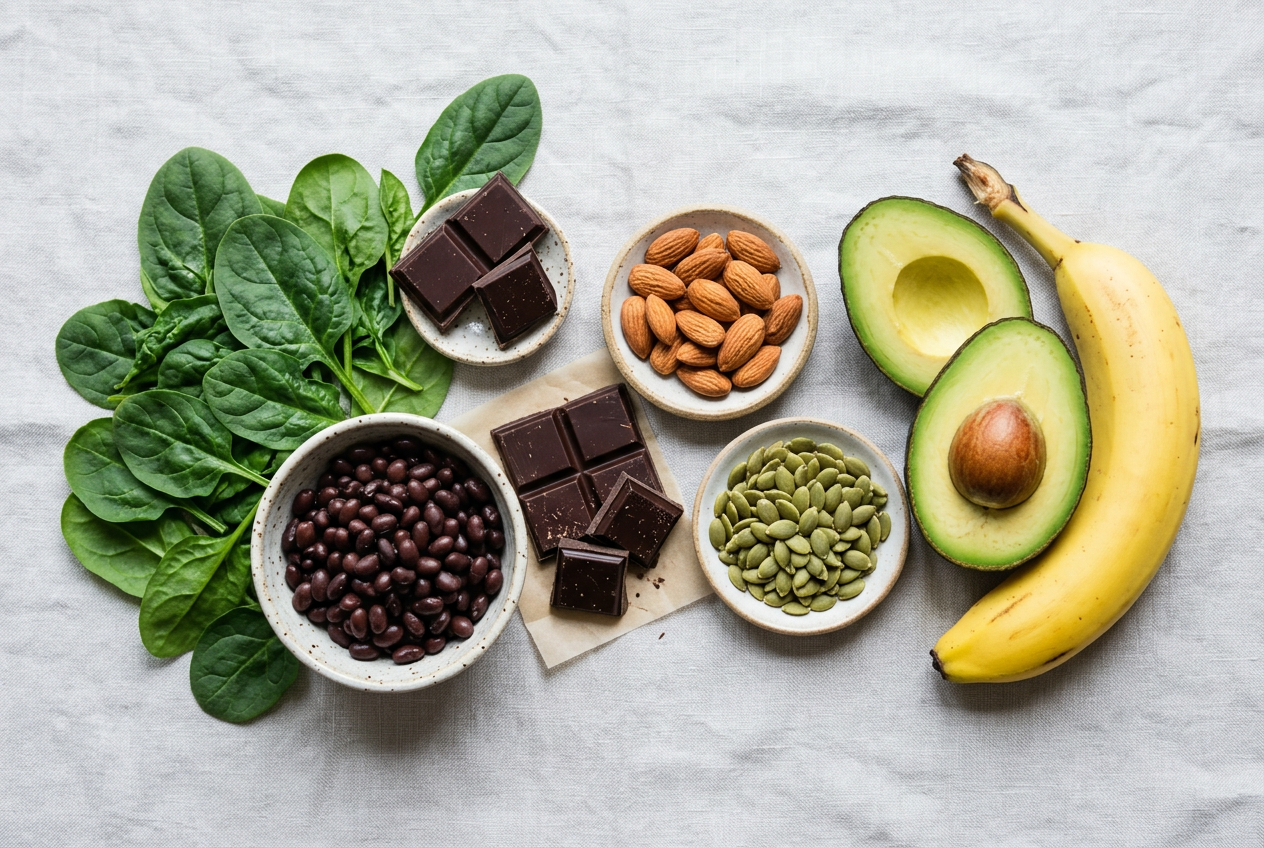
- Dark leafy greens — spinach, kale and Swiss chard are magnesium superstars.
- Nuts and seeds — pumpkin seeds, almonds, cashews and chia seeds.
- Dark chocolate — yes, really! Choose 70% or higher for a genuine magnesium hit.
- Avocado — creamy, satisfying and full of magnesium and healthy fats.
- Legumes — black beans, chickpeas and lentils.
- Whole grains — oats, brown rice and quinoa.
- Bananas — convenient, portable and a lovely source.
- Fatty fish — salmon and mackerel offer magnesium plus omega-3s.
Signs you might be running low
Because magnesium is involved in so much, the signs of a shortfall can be easy to miss or blame on something else. A few of the most common ones I hear about are trouble sleeping, muscle cramps or twitches, feeling unusually anxious or irritable, low energy, frequent headaches, and constipation. None of these on their own proves you are deficient — but if several sound familiar, it is well worth paying attention to your magnesium intake, and mentioning it to your doctor if things persist.
Simple ways to get more every day
You do not need a complicated plan to top up your magnesium — just a few easy habits woven into your normal day. Stir a handful of spinach into your morning eggs or smoothie. Keep a little pot of pumpkin seeds and almonds on the counter to sprinkle over yoghurt, salads or porridge. Swap a sugary afternoon treat for a couple of squares of dark chocolate. Add black beans or lentils to soups and stews. And build meals around whole grains like oats and quinoa rather than refined versions. Small, repeatable swaps like these add up quickly and painlessly.
A warm bath with Epsom salts (which are made of magnesium sulphate) can also be a lovely, relaxing way to wind down in the evening — and many women find it soothes tired, achy muscles beautifully, whether or not it makes a big dent in your overall levels.
How much do you need — and should you supplement?
Most women need somewhere around 300–320mg of magnesium a day, and you can absolutely reach that through food with a little intention. A spinach-and-seed-topped breakfast, a handful of almonds, some black beans at lunch and a square or two of dark chocolate will get you a long way there.
That said, many women in midlife do benefit from a supplement, particularly if sleep, cramps or anxiety are troubling you. Magnesium glycinate is gentle and especially good for sleep and relaxation, while magnesium citrate is well absorbed and can help if you are prone to constipation. It is generally very safe, but always check with your doctor or pharmacist first — especially if you take other medications or have kidney concerns.
A small change with a big payoff
What I love about magnesium is how quietly powerful it is. It will not make headlines or promise miracles, but getting enough of it touches so many of the things women over 40 struggle with most — sleep, mood, cramps, energy and bones — all at once. It is a beautiful example of how the fundamentals, done consistently, do the heavy lifting.
This week, try adding one or two magnesium-rich foods to your day and see how you feel. Sometimes the smallest, most unglamorous changes are exactly the ones that help you feel strong, calm and steady again. And that is what your strong era is all about. 💛
Free 7-Day Fat Loss Meal Plan
A printable week of protein-forward meals, shopping list and meal prep guide — designed for women over 40.
🔒 No spam, ever. Unsubscribe anytime.
Want personalised help with this?
My 1:1 online coaching gives you a fully custom training and nutrition plan built around your goals, your body, and your life. 12 weeks, $69/week, with me in your corner the whole way.
Learn About CoachingFree 7-Day Fat Loss Meal Plan
A printable week of protein-forward meals, shopping list, meal prep guide and tracker — designed for women over 40.