How Much Protein Is In That? A Protein Cheat Sheet for Women Over 40
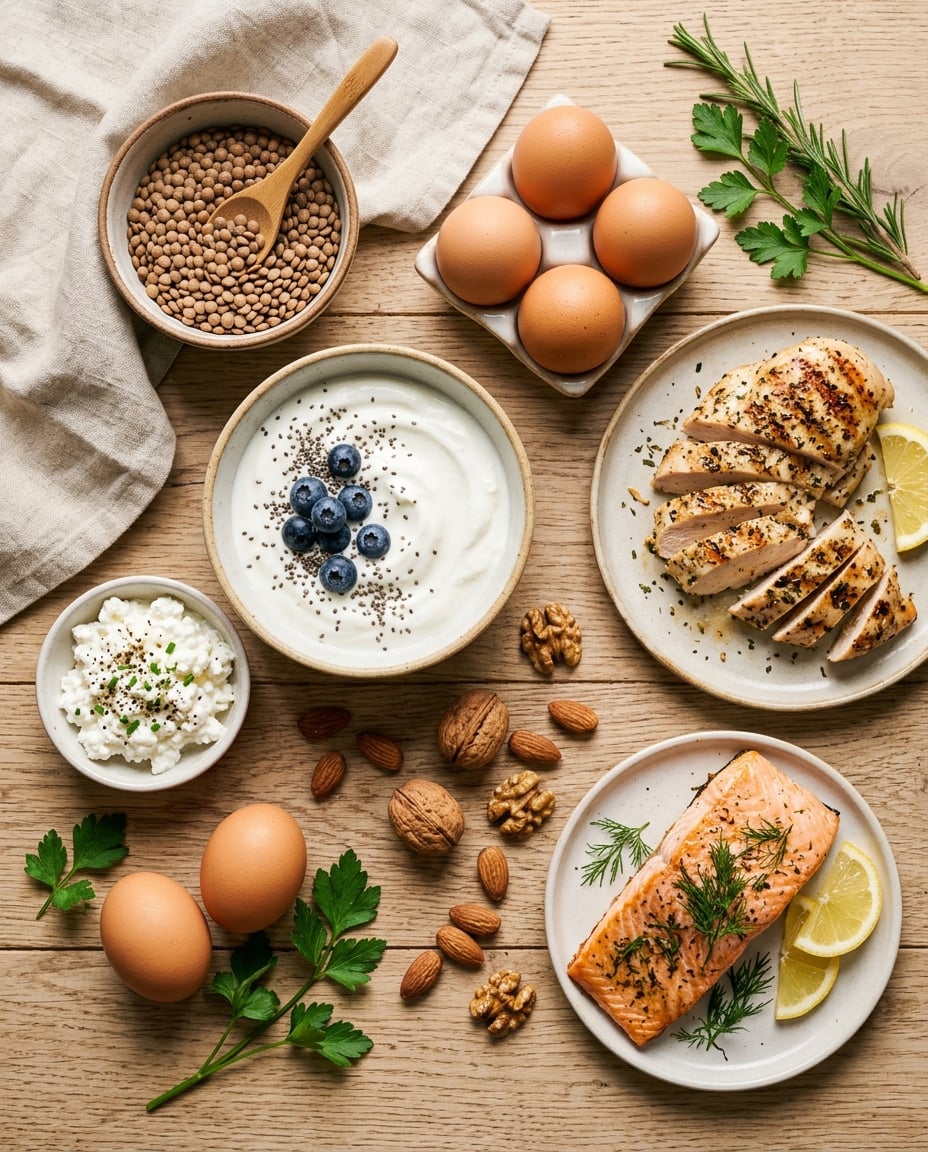
"How much protein is actually in that?" It's one of the most common questions I get asked — and honestly, it's a brilliant one. Because once you can glance at a food and roughly know its protein value, hitting your daily target stops feeling like a maths exam and starts feeling like second nature. So I've put together this simple cheat sheet for you: real foods, real portions, real numbers. Pop it on your fridge, save it to your phone, and let it take the guesswork out of eating well after 40.
Free 7-Day Fat Loss Meal Plan
A printable week of protein-forward meals, shopping list and meal prep guide — designed for women over 40.
🔒 No spam, ever. Unsubscribe anytime.
First, why protein matters so much now
Before we get to the numbers, here's the quick why. From our 40s onwards, we naturally start losing muscle each year — and muscle is what keeps us strong, mobile, and metabolically healthy. Protein is the raw material your body uses to hold onto and rebuild that muscle. It also keeps you fuller for longer, steadies your blood sugar (goodbye afternoon crashes), and even takes more energy to digest than carbs or fat. For women navigating menopause, getting enough protein is genuinely one of the most powerful things you can do for your body.
Your protein cheat sheet
Here's roughly how much protein you'll find in common everyday foods. These are approximate — real foods vary — but they're close enough to guide you beautifully.
Animal proteins
- Chicken breast (100g cooked): ~31g protein. Lean, versatile and affordable — a genuine powerhouse.
- Salmon fillet (100g cooked): ~25g protein, plus anti-inflammatory omega-3 fats for your heart and brain.
- 2 large eggs: ~12g protein. The perfect quick breakfast, and one of the highest-quality proteins there is.
- Greek yoghurt (100g): ~10g protein. Twice that of regular yoghurt — a lovely easy snack.
- Cottage cheese (100g): ~11g protein. Wonderful on toast or with fruit.
- Tinned tuna (1 small tin): ~25g protein. Store-cupboard hero for fast lunches.
- Lean beef mince (100g cooked): ~26g protein, plus iron and B12.
Plant proteins
- Tinned lentils (100g): ~9g protein, plus gut-loving fibre.
- Chickpeas (100g): ~8g protein. Roast them, blend into hummus, or toss through salads.
- Tofu (100g): ~8g protein and endlessly versatile.
- Edamame (100g): ~11g protein — a brilliant snack.
- Almonds (30g, a small handful): ~6g protein with healthy fats.
Handy extras
- Protein powder (1 scoop): ~20–25g protein. Perfect for bridging a gap on busy days.
- Milk (250ml): ~8g protein.
- Cheddar cheese (30g): ~7g protein.
So how much do you actually need?
Here's the target I give the women I coach: aim for 25–30g of protein per meal, across 3–4 meals a day. Over the day, that works out to roughly 1.2–1.6g of protein per kilogram of your bodyweight. So a 70kg woman is aiming for somewhere around 85–110g a day.
Don't worry about hitting it perfectly to the gram. The goal is simply to get more than you're probably getting now, and to include a good protein source at every meal rather than saving it all for dinner. Spreading it across the day helps your body actually use it to protect muscle.
What 25–30g looks like on a plate
To make it real, here's how easily you can hit that per-meal target:
- Breakfast: 2 eggs (12g) + a pot of Greek yoghurt (10g) + a handful of almonds (6g) = ~28g. ✅
- Lunch: A tin of tuna (25g) on a big salad with a sprinkle of seeds = ~28g. ✅
- Dinner: A palm-sized chicken breast (31g) with veg and lentils = ~35g. ✅
See how doable that is? No shakes six times a day, no chicken-and-broccoli misery. Just real, satisfying meals built around a solid protein source.
Simple tricks to get more protein in
- Start your day with protein — it sets you up to hit your target and steadies your appetite.
- Keep easy options on hand: boiled eggs, Greek yoghurt, tinned fish, edamame.
- Add a scoop of protein powder to porridge or a smoothie on rushed mornings.
- Batch-cook a tray of chicken or a pot of lentils so protein is always ready to go.
- Treat protein as the anchor of your plate, then build veg and carbs around it.
A gentle reminder
You don't need to weigh and track every morsel forever. Use this cheat sheet for a week or two just to train your eye — you'll quickly get a feel for what a good protein portion looks like, and then it becomes wonderfully automatic. Eating well after 40 isn't about restriction or rules. It's about giving your strong, capable body the fuel it deserves.
Save this one, keep it handy, and let it make your meals that little bit easier. Your muscles, your bones and your energy levels will thank you. 💛
Free 7-Day Fat Loss Meal Plan
A printable week of protein-forward meals, shopping list and meal prep guide — designed for women over 40.
🔒 No spam, ever. Unsubscribe anytime.
Want personalised help with this?
My 1:1 online coaching gives you a fully custom training and nutrition plan built around your goals, your body, and your life. 12 weeks, $69/week, with me in your corner the whole way.
Learn About CoachingFree 7-Day Fat Loss Meal Plan
A printable week of protein-forward meals, shopping list, meal prep guide and tracker — designed for women over 40.