How to Track Progress Without the Scale: 8 Better Ways to Measure What Matters
Let me paint a picture you might recognise. You have been training consistently for six weeks. You feel stronger, your clothes fit better, you are sleeping more deeply than you have in years, and your energy is through the roof. Then you step on the scale, see the same number — or worse, a higher one — and every bit of that progress evaporates from your mind. Sound familiar?
The bathroom scale is one of the most misleading tools in fitness, and it does a spectacular amount of damage to women over 40 who are doing everything right. Muscle is denser than fat, hormones cause daily water fluctuations, and the number on that little screen tells you absolutely nothing about your strength, your health or your shape. It is time to put it away and start measuring what actually matters.
Free Protein Cheat Sheet
Your daily protein target, the protein in 40+ everyday foods, and 25 easy high-protein snacks — all on one printable page.
🔒 No spam, ever. Unsubscribe anytime.
Why the Scale Lies After 40
Several things happen simultaneously when you start strength training in your forties and fifties:
- You build muscle while losing fat. Muscle is denser than fat, so you can look visibly leaner, drop a dress size, and weigh exactly the same — or more. This is called body recomposition, and it is the most common outcome of a good strength programme.
- Hormonal water fluctuations. Oestrogen, cortisol and even your menstrual cycle (or the hormonal shifts of perimenopause) cause your body to hold and release water unpredictably. The scale can swing 1-3 kg overnight with zero change in actual body fat.
- Glycogen storage. When you start training, your muscles store more glycogen (their fuel source), and glycogen binds water. This is a sign your muscles are well-fuelled and ready to work — a good thing — but it adds temporary weight.
- Inflammation from training. After a hard session, your muscles hold water as part of the repair process. Weigh yourself the morning after a tough leg day and you will almost certainly be "heavier."
None of these has anything to do with gaining fat. But the scale cannot tell the difference — and neither can your emotions at 6am.
Eight Ways to Track Progress That Actually Mean Something
Put the scale in a cupboard (or better yet, give it away) and try these instead. Each one tells you something real about your health, strength and body composition.
1. Progress Photos
Take a front, side and back photo in the same lighting, same clothes, same time of day, once a month. You will not see changes day to day, but side-by-side photos over eight to twelve weeks are genuinely eye-opening. The camera captures what the scale cannot: the shape of your shoulders, the definition in your arms, the way your waist has changed.
2. How Your Clothes Fit
Pick one pair of jeans or a fitted dress and try it on every few weeks. This is one of the most honest and immediate ways to track body composition changes. If it is getting looser through the waist and thighs while the scale has not moved, you are recomposing — which is exactly what you want.
3. Strength Milestones
Write down what you lift each session. When your goblet squat goes from 8 kg to 14 kg, or your push-ups go from wall-assisted to full, that is measurable, undeniable progress. Strength gains are the clearest sign that your muscles are growing, your bones are getting loaded, and your body is transforming from the inside out.
4. Body Measurements
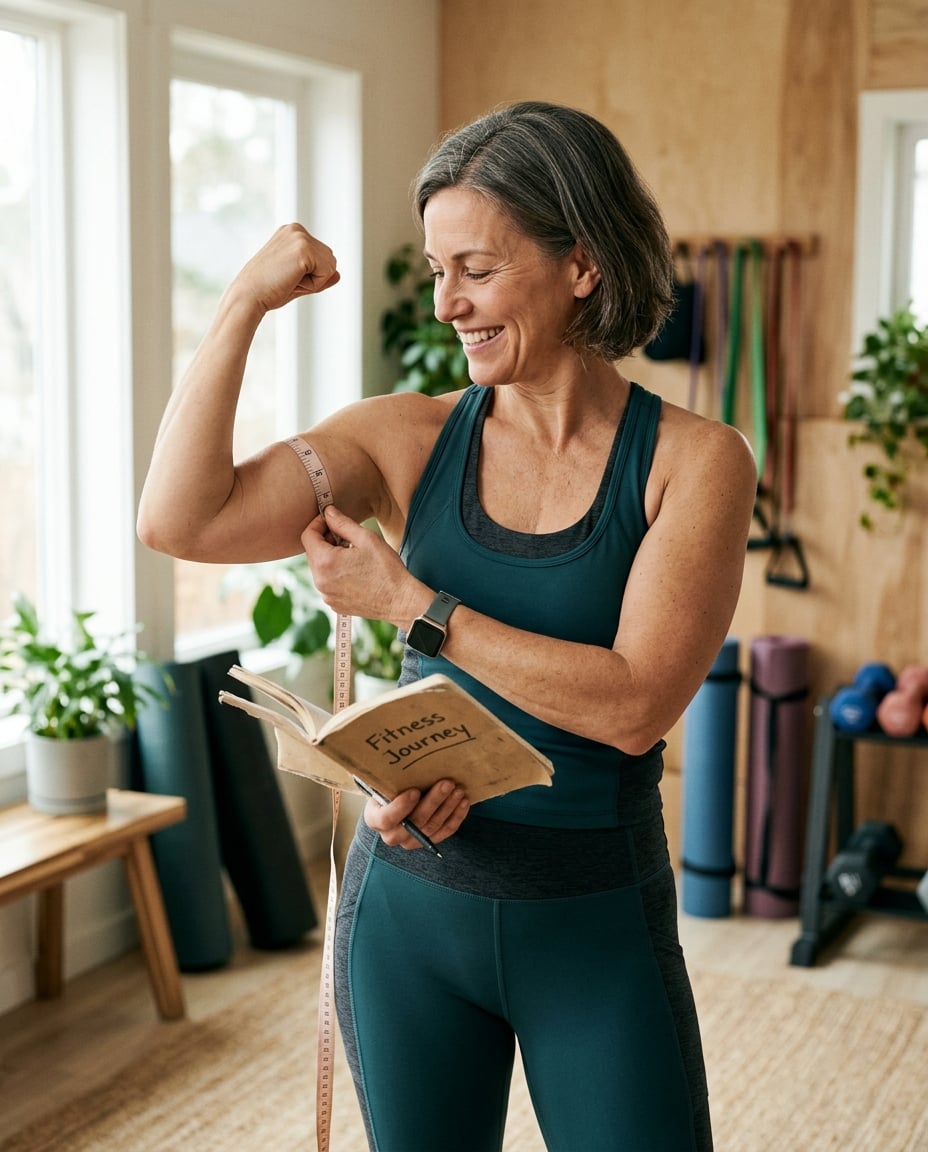
Use a tape measure around your waist, hips, upper arm, and thigh. Measure once a month, same time of day. Inches lost around the waist with inches gained around the upper arm is the hallmark of successful body recomposition — and the scale would call that a "failure."
5. Energy Levels
Rate your daily energy on a simple 1-5 scale in a journal or your phone. Over time, you will see patterns emerge. Consistent 4s and 5s where you used to live at 2 is a sign that your metabolism, sleep and nutrition are all moving in the right direction.
6. Sleep Quality
Are you falling asleep more easily? Waking up less during the night? Feeling rested in the morning? Improved sleep is one of the earliest and most reliable signs that your training and nutrition are supporting your body properly. Track it — it matters far more than a number on a scale.
7. Daily Movement Confidence
Notice how everyday tasks feel. Can you carry all the shopping in one trip? Get up from the floor without using your hands? Keep up with the grandchildren without getting puffed? These functional markers are what strength training is really for, and they improve long before the mirror or the scale catch up.
8. Mood and Mental Clarity
Strength training has a profound effect on mood, anxiety and mental clarity — particularly during the hormonal shifts of midlife. If you feel calmer, sharper and more resilient than you did two months ago, that is progress. Write it down. Celebrate it. It is every bit as important as how your arms look in a singlet.
How to Build a Simple Tracking Habit
You do not need an elaborate system. Here is a simple approach that takes two minutes:
- Daily: Rate your energy and mood (1-5) in a notes app or journal. Log your workouts and what you lifted.
- Weekly: Note how your reference outfit fits. Write one sentence about how you feel physically.
- Monthly: Take progress photos. Measure waist, hips, arms, thighs. Review your strength numbers.
At the end of each month, read back through your notes. You will be stunned at how much has changed — and none of it required a scale.
The Real Measure of Progress
Progress after 40 is not a number. It is the feeling of picking up something heavy and realising it is easy now. It is sleeping through the night. It is walking past a mirror and liking what you see. It is the quiet confidence that comes from knowing you showed up for yourself, again and again, even when no one was watching.
Ditch the scale. Trust the process. And measure the things that actually tell your story — because it is a far better story than any number could ever tell.
Free Protein Cheat Sheet
Your daily protein target, the protein in 40+ everyday foods, and 25 easy high-protein snacks — all on one printable page.
🔒 No spam, ever. Unsubscribe anytime.
Want personalised help with this?
My 1:1 online coaching gives you a fully custom training and nutrition plan built around your goals, your body, and your life. 12 weeks, $69/week, with me in your corner the whole way.
Learn About CoachingFree 7-Day Fat Loss Meal Plan
A printable week of protein-forward meals, shopping list, meal prep guide and tracker — designed for women over 40.