Vitamin D for Women Over 40: The Sunshine Vitamin Your Bones Need
It is nicknamed the "sunshine vitamin", but for so many women over 40, vitamin D is the quiet gap in an otherwise healthy routine. You can be eating well, moving regularly and still be running low — and because the symptoms are vague and creep in slowly, it is easy to miss. Yet vitamin D plays a starring role in exactly the things that matter most in midlife: strong bones, a resilient immune system, steady mood and muscle strength.
If you have been feeling more tired than usual, catching every cold going round, noticing aches in your bones or muscles, or your mood dipping in the darker months, low vitamin D could be part of the picture. Here is what every woman over 40 needs to know — without the jargon.
Free 7-Day Fat Loss Meal Plan
A printable week of protein-forward meals, shopping list and meal prep guide — designed for women over 40.
🔒 No spam, ever. Unsubscribe anytime.
Why Vitamin D Matters More After 40
Vitamin D is not really a vitamin at all — it behaves more like a hormone, and your body needs it to absorb calcium. Without enough of it, the calcium in your diet cannot do its job of keeping your bones strong. This becomes critical after 40, when falling oestrogen through perimenopause and menopause accelerates bone loss. Vitamin D and calcium together are your front-line defence against osteoporosis and fractures.
It does far more than protect bones, though. Vitamin D supports your immune system, helps regulate mood (low levels are linked with low mood, especially in winter), and is essential for muscle function and strength — which is why a deficiency can leave you feeling weak, achy and exhausted. As we age, our skin also becomes less efficient at making vitamin D from sunlight, so the odds of running low quietly increase.
Signs You Might Be Low
Vitamin D deficiency is often silent, but common signs include:
- Persistent tiredness and low energy
- Frequent colds or infections
- Aching bones or muscles, or muscle weakness
- Low mood, particularly through autumn and winter
- Hair thinning and slow-healing wounds
These symptoms overlap with plenty of other midlife changes, which is exactly why the only way to know for sure is a simple blood test — ask your GP if you are concerned.
How Much Do You Need?
The general recommendation for adults is 10 micrograms (400 IU) of vitamin D a day. That sounds tiny, but because so few foods contain it and sunlight is unreliable for much of the year, hitting that target consistently is harder than it looks. The goal is not to obsess over an exact number every day, but to build reliable habits — some oily fish each week, a few fortified foods, sensible summer sun, and a supplement to bridge the gap when needed. If you have osteoporosis, a diagnosed deficiency, or a medical condition, your GP may recommend a higher, tailored dose.
The Best Food Sources of Vitamin D
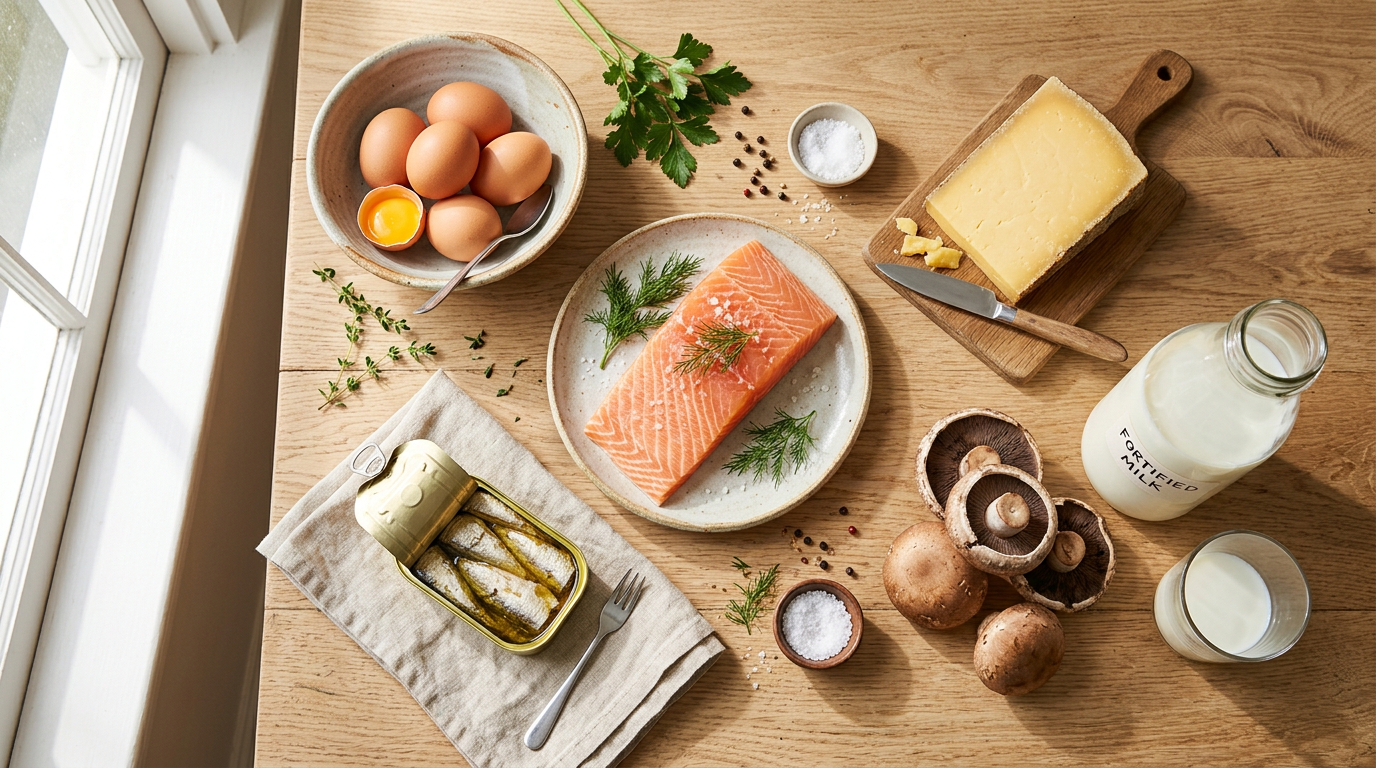
Very few foods contain vitamin D naturally, which is why diet alone often is not enough — but these are the richest sources worth building into your week:
- Oily fish — salmon, mackerel, sardines and trout are the champions. A portion of salmon can provide a large chunk of your daily needs.
- Tinned fish — sardines and pilchards (bones and all) give you vitamin D and a calcium bonus.
- Egg yolks — a convenient everyday source; the D is in the yolk, so eat the whole egg.
- Mushrooms — the only notable plant source, especially those grown in or exposed to UV light.
- Fortified foods — many milks, plant milks, yoghurts and breakfast cereals have vitamin D added; check the label.
- Red meat and liver — smaller amounts, but they contribute.
Sunlight: Free, But Not Always Enough
Your body makes vitamin D when sunlight hits your skin, and in the sunnier months a little daily exposure to your face and arms can top you up nicely. But there are real limits: from about October to March in the UK and other northern climates, the sun is simply too weak to make any vitamin D at all. Add in sunscreen (rightly worn to protect your skin), more time indoors, and skin that makes less as we age, and sunshine alone often cannot cover you year-round.
Should You Take a Supplement?
For most women over 40, a daily vitamin D supplement through the darker months is a sensible, simple insurance policy. Public health guidance in the UK recommends that adults consider a daily supplement of 10 micrograms (400 IU) in autumn and winter, and year-round for those who get little sun. Many women benefit from taking it all year.
If you spend most of your day indoors, have darker skin (which makes vitamin D more slowly), always wear sunscreen, or cover up for cultural or personal reasons, you are more likely to run low and may benefit from a supplement throughout the year. It is a small, inexpensive habit that pays back in stronger bones and steadier energy — and one of the easiest wins in your whole routine.
A few practical pointers:
- Take it with a meal containing some fat — vitamin D is fat-soluble and absorbs better that way.
- Look for vitamin D3 (cholecalciferol), the form your body uses most effectively.
- Do not mega-dose. More is not better — very high doses over time can be harmful. Stick to recommended amounts unless your GP advises otherwise.
- Pair it with calcium and weight-bearing exercise for the best bone-protecting results — vitamin D, calcium and strength training are a powerful trio for midlife bones.
- Be consistent. A daily habit works far better than remembering it now and then; leave the bottle by the kettle or your toothbrush as a reminder.
The Bottom Line
Vitamin D is one of the simplest, most affordable things you can get right for your long-term health after 40. It keeps your bones strong, your immune system robust, your muscles working and your mood steadier through the seasons. Build oily fish, eggs and fortified foods into your week, enjoy a little summer sunshine sensibly, and consider a daily D3 supplement through the darker months. If you are worried you might be low, a quick blood test gives you the answer. Small habit, big payoff — your future self will thank you.
Free 7-Day Fat Loss Meal Plan
A printable week of protein-forward meals, shopping list and meal prep guide — designed for women over 40.
🔒 No spam, ever. Unsubscribe anytime.
Want personalised help with this?
My 1:1 online coaching gives you a fully custom training and nutrition plan built around your goals, your body, and your life. 12 weeks, $69/week, with me in your corner the whole way.
Learn About CoachingFree 7-Day Fat Loss Meal Plan
A printable week of protein-forward meals, shopping list, meal prep guide and tracker — designed for women over 40.