Why Walking is the Most Underrated Workout After 40
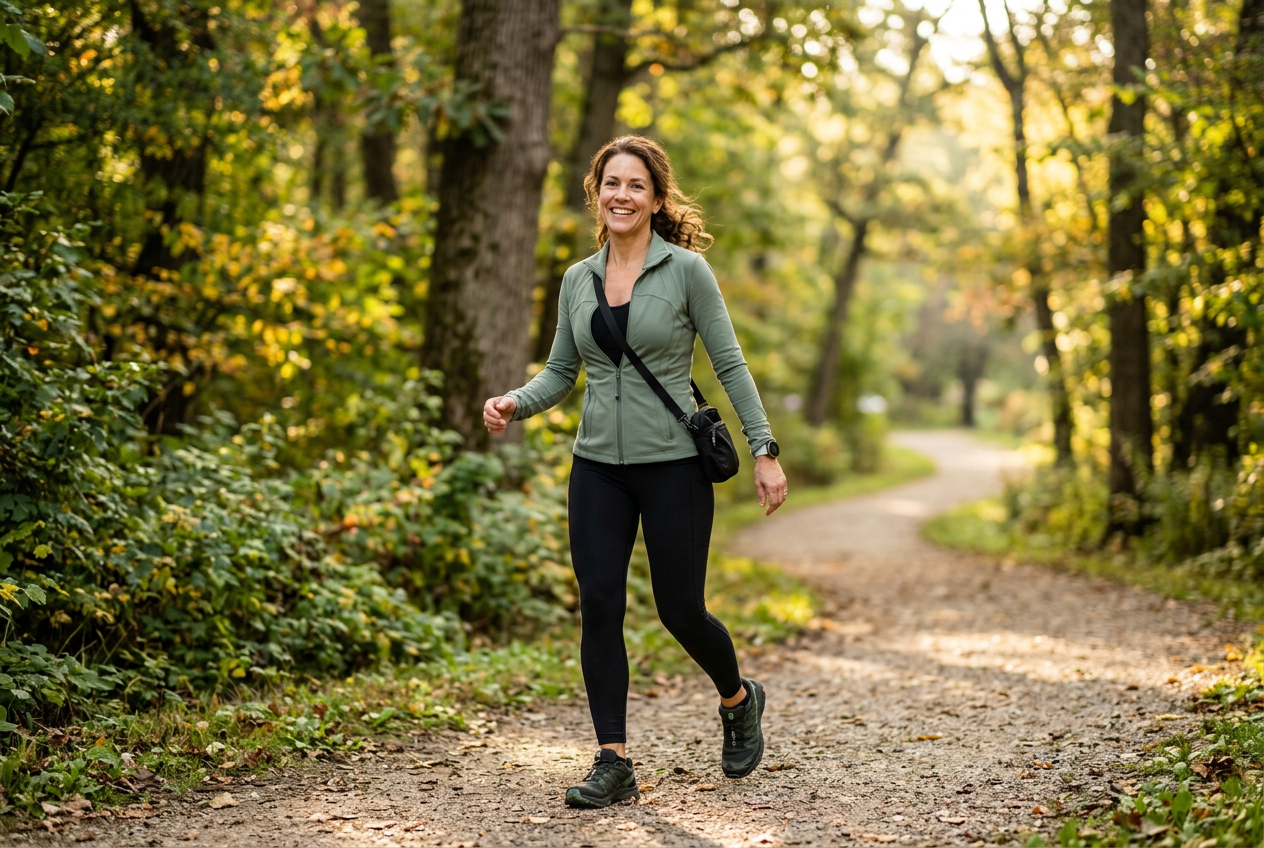
Walking doesn't get the credit it deserves. It's not flashy. It doesn't burn as many calories as a spin class. And you won't see it trending on Instagram with a catchy hashtag.
But if I had to pick one form of movement that every woman over 40 should do consistently, it would be walking. Not because it's easy (though it is accessible), but because it does so much more than you think — for your body, your mind, your hormones, and your long-term health.
Here's why walking is quietly one of the best workouts you can do after 40 — and how to make your walks actually count.
Free 7-Day Beginner Strength Plan
Three simple full-body dumbbell workouts with form cues, warm-ups and rest days built in — designed for women over 40.
🔒 No spam, ever. Unsubscribe anytime.
Why walking works so well for women over 40
Let's get one thing straight: walking is exercise. Real, valuable, results-driven exercise. The idea that it "doesn't count" unless you're dripping in sweat is a myth — and one that stops a lot of women from giving walking the respect it deserves.
After 40, your body's priorities shift. Yes, you still want to be strong and lean — but you also need to protect your joints, manage stress, support bone density, and keep your metabolism ticking over without constantly battering your body with high-impact workouts.
Walking ticks every one of those boxes. And if you do it right, it can genuinely transform how you look and feel.
Six reasons walking beats the gym after 40
1. It burns fat without wrecking your hormones
High-intensity workouts have their place — but if you're over 40, stressed, not sleeping well, or dealing with perimenopausal symptoms, smashing yourself with HIIT five days a week can actually backfire.
Why? Because intense exercise is a stressor. Your body releases cortisol (your stress hormone) to cope with the demand. A little cortisol is fine — but chronic high cortisol from overtraining, under-recovering, and life stress combined can mess with your sleep, increase belly fat storage, and make weight loss harder.
Walking, on the other hand, is low-stress. It burns calories (more than you think — a brisk 60-minute walk can burn 250 to 350 calories), taps into fat stores for fuel, and doesn't spike cortisol. In fact, it often lowers it.
That's why walking is one of the best fat-loss tools for women over 40: it works with your hormones, not against them.
2. It's joint-friendly and sustainable
Your joints have taken you through decades of life — running, dancing, lifting kids, playing sports. After 40, it's normal for knees, hips, and ankles to need a bit more care.
Walking is low-impact. There's no pounding, no jarring, no risk of tweaking something if you land wrong. You can do it every single day without needing a recovery day, and it actually supports joint health by keeping them mobile and lubricated.
Compare that to running (which I'm not against — but it's not for everyone, especially if your knees protest) or jump-heavy workouts that can aggravate old injuries. Walking is the movement you can keep doing for life.
3. It builds bone density (yes, really)
Bone density peaks in your thirties and starts to decline as oestrogen drops. By the time you hit menopause, that decline speeds up — which is why osteoporosis and fractures become a real concern.
Weight-bearing exercise is one of the best ways to maintain and even build bone density. And walking counts. Every step you take sends a signal to your bones that they need to stay strong to support your body weight.
The key is intensity. A slow, meandering stroll won't cut it. You need a purposeful pace — brisk enough that you're slightly out of breath but can still hold a conversation. Add in some hills or inclines, and you're giving your bones even more stimulus.
Pair walking with strength training (especially exercises that load your spine, hips, and legs like squats and deadlifts), and you've got a rock-solid bone-protection plan.
4. It calms your nervous system and lowers stress
This is the benefit nobody talks about enough. Walking — especially outdoors — is one of the most effective stress-reduction tools you have. And stress management is crucial for women over 40.
When you walk, especially in nature, your nervous system shifts from "fight or flight" (sympathetic) to "rest and digest" (parasympathetic). Your heart rate slows, your breathing deepens, cortisol drops, and your mind clears.
If you've been feeling anxious, overwhelmed, or stuck in your head, a 20-minute walk can genuinely reset your mood. It's moving meditation — and it works.
This isn't just feel-good fluff, either. Lower stress means better sleep, better digestion, better hormonal balance, and easier fat loss. Walking is self-care that actually moves the needle.
5. It supports your metabolism (without the hunger)
One of the sneaky benefits of walking is that it increases your daily energy expenditure without triggering the ravenous hunger that comes after a tough gym session.
NEAT (non-exercise activity thermogenesis) — the calories you burn through everyday movement — is a huge part of your total daily energy expenditure. And walking is one of the easiest ways to boost it.
A 45-minute walk after dinner, a lunchtime stroll, or a morning walk before breakfast all add up. Over a week, that's an extra 1,500 to 2,000 calories burned — without feeling like you're "dieting" or forcing yourself through punishing workouts.
And because walking doesn't deplete your glycogen stores or leave you shattered, you won't find yourself face-first in the biscuit tin two hours later.
6. It improves insulin sensitivity and blood sugar control
Insulin resistance becomes more common after 40, especially around perimenopause. It's one of the reasons stubborn belly fat creeps in, energy crashes after meals, and weight loss gets harder.
Walking — especially after meals — is one of the simplest ways to improve insulin sensitivity. When you walk, your muscles use glucose for fuel, which helps clear it from your bloodstream and prevents those post-meal blood sugar spikes.
A 15-minute walk after lunch or dinner can lower your blood sugar by up to 30%. Do that consistently, and you're giving your metabolism a serious upgrade.
How to make your walks actually count
Not all walks are created equal. If you're strolling slowly whilst scrolling Instagram, you're moving — but you're not getting the full benefits. Here's how to level up:
Pick up the pace
Aim for a brisk walk — around 4 to 5 km/h (roughly 15 to 20 minutes per mile). You should feel slightly out of breath but still able to chat. This is the sweet spot for fat burning, cardiovascular benefit, and calorie burn.
Add hills or inclines
Walking uphill or on an incline recruits more muscle (especially your glutes and hamstrings), burns more calories, and gives your bones and heart a bigger stimulus. Find a hilly route, or if you're on a treadmill, set the incline to 5-10%.
Go for at least 30 minutes
Short walks are great for stress relief and post-meal blood sugar control, but if you want fat-burning and cardiovascular benefits, aim for 30 to 60 minutes most days.
Make it a daily habit
Consistency beats intensity every time. A 30-minute walk every single day will do more for your body than one epic hike at the weekend followed by six days on the sofa.
Build it into your routine: morning walk before breakfast, lunchtime walk to break up your day, or an evening walk to unwind. Make it non-negotiable.
Leave your phone behind (or at least put it away)
If you want the full stress-relief, mind-clearing, nervous-system-calming benefits of walking, don't spend the whole time on your phone. Listen to music, a podcast, or just the sound of your own footsteps. Let your brain rest.
Walking vs. the gym: do you have to choose?
Absolutely not. Walking and strength training are the dream team for women over 40.
Strength training builds muscle, protects bone density, and boosts metabolism. Walking supports fat loss, manages stress, and keeps you moving every day without overloading your system.
My ideal week for a woman over 40?
- 3 strength sessions (full-body or upper/lower split, 30-45 minutes each)
- Daily walks (30-60 minutes, mix of brisk and leisurely depending on how you feel)
- 1-2 rest or active recovery days (gentle yoga, stretching, or a slow walk)
That's it. You don't need to run marathons, do burpees until you're sick, or spend two hours in the gym. Walking + lifting is simple, sustainable, and incredibly effective.
The bottom line
Walking is the most underrated workout after 40 because it doesn't feel hard — but it works. It burns fat, calms stress, protects your bones and joints, supports your metabolism, and doesn't leave you exhausted or ravenous.
It's the movement you can do every single day for the rest of your life. And that consistency — that daily, unglamorous, one-foot-in-front-of-the-other commitment — is what builds real, lasting health.
So lace up your trainers, step outside, and give walking the credit it deserves. Your body will thank you for it.
💛Free 7-Day Beginner Strength Plan
Three simple full-body dumbbell workouts with form cues, warm-ups and rest days built in — designed for women over 40.
🔒 No spam, ever. Unsubscribe anytime.
Want personalised help with this?
My 1:1 online coaching gives you a fully custom training and nutrition plan built around your goals, your body, and your life. 12 weeks, $69/week, with me in your corner the whole way.
Learn About CoachingFree 7-Day Fat Loss Meal Plan
A printable week of protein-forward meals, shopping list, meal prep guide and tracker — designed for women over 40.