Why Women Over 40 Should Lift Heavy (and How to Start)
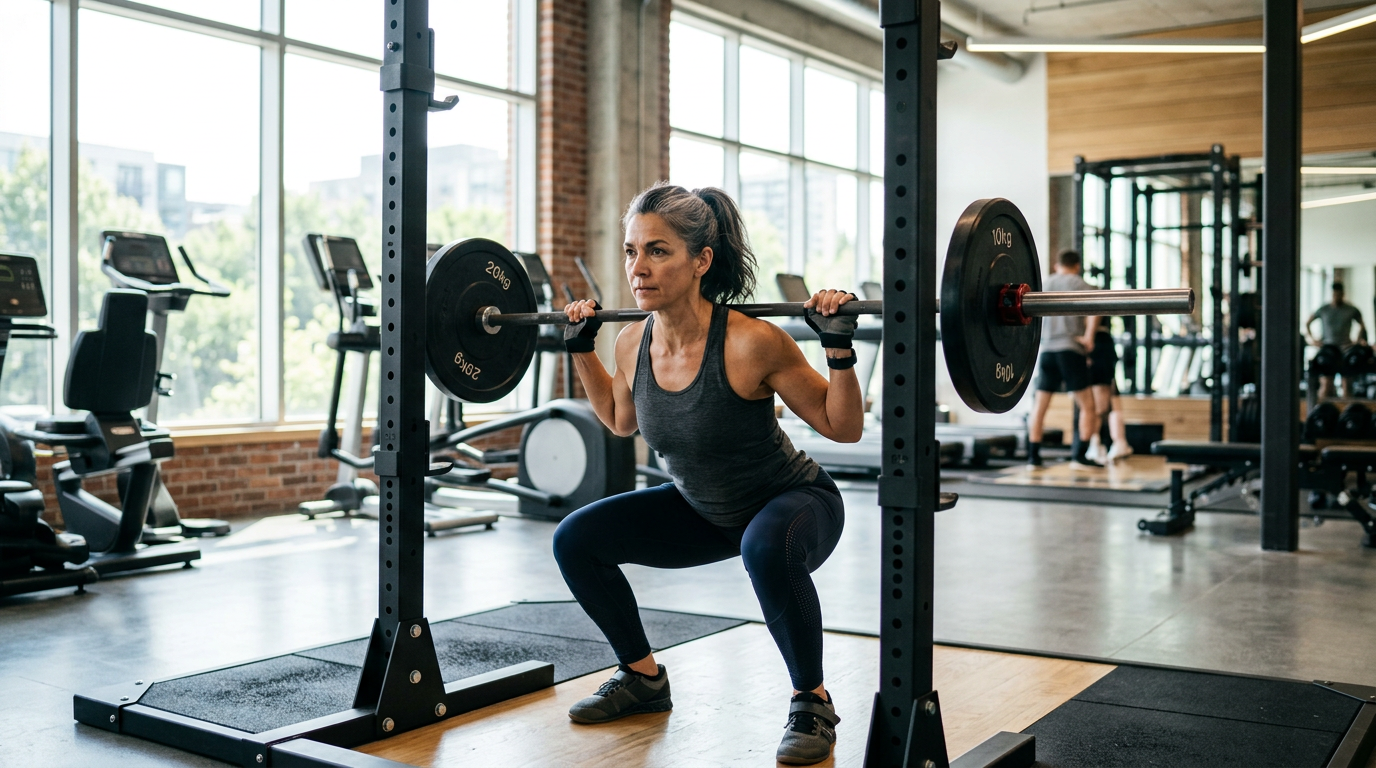
Let us get one thing straight right from the start: lifting weights will not make you bulky. It will not make you look masculine. It will not injure you if you do it properly. What it will do — especially after 40 — is protect your bones, build the metabolism-boosting muscle your body is actively losing, improve your posture, reduce your injury risk, sharpen your mind and give you a level of physical confidence that no amount of cardio can match.
If you are a woman over 40 and you are not lifting weights yet, this article is for you. And if you are already lifting but wondering whether you should go heavier, the answer is almost certainly yes.
Free 7-Day Beginner Strength Plan
Three simple full-body dumbbell workouts with form cues, warm-ups and rest days built in — designed for women over 40.
🔒 No spam, ever. Unsubscribe anytime.
Why Weight Lifting Matters More After 40
Your body is changing. From around age 30, women lose roughly 3–8% of their muscle mass per decade — and that rate accelerates after 40, especially around menopause. This process, called sarcopenia, does not just make you weaker. It slows your metabolism, increases your body fat percentage (even if your weight stays the same), weakens your bones and makes everyday activities harder.
The single most effective way to fight sarcopenia is resistance training — lifting weights. Not walking. Not yoga. Not Pilates (though those have their place). Lifting progressively heavier things is how your body builds and maintains the muscle it is otherwise losing.
The Bone Density Connection
After menopause, women lose bone density at an alarming rate. Oestrogen — which plays a key role in maintaining bone strength — drops significantly, and without it, bones become more fragile. Osteoporosis affects one in three women over 50 in Australia.
Weight lifting is one of the most evidence-backed ways to protect and even build bone density. When you lift something heavy, the force travels through your muscles and into your bones. Your bones respond by becoming denser and stronger. Research consistently shows that women who do regular weight training have significantly higher bone density than those who do not.
This is not a nice-to-have. It is a critical health strategy. A broken hip after 60 can be life-changing — and not in a good way. The time to build that bone density is now.
What Counts as "Weight Lifting"?
Weight lifting does not mean you have to be in a squat rack with a loaded barbell (though that is brilliant if you want to). It means training with external resistance that challenges your muscles beyond what bodyweight alone can do. That includes:
- Dumbbells — the most versatile and beginner-friendly option
- Barbells — for bigger compound lifts like squats, deadlifts and bench press
- Kettlebells — excellent for dynamic, full-body movements
- Cable machines — great for controlled, joint-friendly resistance
- Weight plates — for loaded carries, goblet squats and more
The key is progressive overload: gradually increasing the weight, the reps or the sets over time so your muscles keep adapting and growing stronger. If you have been using the same 3kg dumbbells for two years, your body has long since adapted. It is time to go heavier.
How Heavy Should You Lift?
This is the question most women ask, and the answer surprises them: heavier than you think. If you can comfortably do 15 reps of an exercise without any real struggle, the weight is too light to drive meaningful strength or muscle gains.
A good guideline: choose a weight that makes the last 2–3 reps of each set genuinely difficult. You should be able to complete them with good form, but they should feel hard. That is where the magic happens — that is the stimulus your muscles need to grow.
For most women new to proper weight training, this means:
- Upper body exercises (rows, presses, curls): 5–10kg dumbbells to start
- Lower body exercises (squats, lunges, deadlifts): 8–15kg dumbbells, or a 20–30kg barbell
These are starting points. Within weeks, you will be lifting more — and that progression is one of the most satisfying feelings in fitness.
A Simple Weekly Weight Lifting Plan
You do not need to live in the gym. Three sessions per week, 30–45 minutes each, is enough to see real results. Here is a simple structure:
Day 1 — Upper Body
- Dumbbell overhead press: 3 sets of 10
- Bent-over dumbbell row: 3 sets of 10
- Dumbbell chest press (flat or incline): 3 sets of 10
- Bicep curls: 2 sets of 12
- Tricep kickbacks: 2 sets of 12
Day 2 — Lower Body
- Goblet squat: 3 sets of 10
- Romanian deadlift: 3 sets of 10
- Walking lunges: 3 sets of 8 per leg
- Glute bridge (weighted): 3 sets of 12
- Calf raises: 2 sets of 15
Day 3 — Full Body
- Barbell or dumbbell deadlift: 3 sets of 8
- Push-ups or dumbbell chest press: 3 sets of 10
- Single-arm dumbbell row: 3 sets of 10 per side
- Step-ups with dumbbells: 3 sets of 8 per leg
- Farmer's carry: 3 sets of 30 seconds
Rest 60–90 seconds between sets. Warm up for 5 minutes before each session (marching, arm circles, bodyweight squats). Cool down with 5 minutes of stretching.
Common Fears — and Why They Are Wrong
"I will get bulky." No, you will not. Women do not have enough testosterone to build large, bulky muscles without years of very specific training and often pharmaceutical assistance. What you will get is lean, defined, strong muscle that makes you look and feel incredible.
"I will hurt myself." Lifting with good form is safer than running, playing tennis or even gardening (which causes more back injuries than weight training). Start light, learn the movements properly, and progress gradually. If you are unsure about form, even a single session with a qualified personal trainer can set you up.
"I am too old to start." Research shows that even people in their 80s and 90s gain muscle and strength from resistance training. You are absolutely not too old. In fact, the older you are, the more you need it.
"Cardio is better for weight loss." Cardio burns calories while you are doing it. Weight training builds muscle that raises your resting metabolic rate — meaning you burn more calories all day, every day, even while you sleep. For long-term fat loss and body composition, weight lifting wins.
What Results Can You Expect?
If you are consistent with three sessions per week and eating enough protein (around 1.6g per kilogram of body weight), here is a realistic timeline:
- Weeks 1–4: You will feel stronger, more energised and more confident. The weights will start to feel lighter.
- Weeks 4–8: Visible muscle definition starts appearing, especially in your arms and shoulders. Clothes fit differently.
- Weeks 8–12: Noticeable changes in body composition. Less body fat, more lean muscle. People start commenting.
- 3–6 months: You will be lifting weights you never thought possible. Your posture will be better. Your joints will feel stronger. You will wonder why you did not start sooner.
The Bottom Line
Weight lifting is not optional after 40 — it is essential. It protects your bones, builds the muscle your body is losing, boosts your metabolism, improves your posture and gives you a kind of strength that makes everything else in life easier. You do not need to be an athlete. You do not need a fancy gym. You just need a couple of dumbbells, a plan, and the willingness to pick up something heavier than you did last week. Start this week. Your future self will thank you.
Free 7-Day Beginner Strength Plan
Three simple full-body dumbbell workouts with form cues, warm-ups and rest days built in — designed for women over 40.
🔒 No spam, ever. Unsubscribe anytime.
Want personalised help with this?
My 1:1 online coaching gives you a fully custom training and nutrition plan built around your goals, your body, and your life. 12 weeks, $69/week, with me in your corner the whole way.
Learn About CoachingFree 7-Day Fat Loss Meal Plan
A printable week of protein-forward meals, shopping list, meal prep guide and tracker — designed for women over 40.